Ground Nesting Bees and Wasps: ID, Ecological Role, and When to Treat
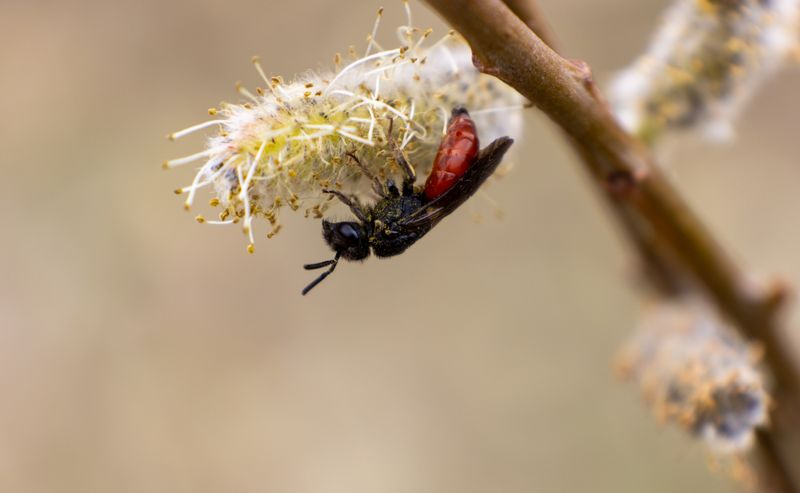
Finding holes in your lawn with insects flying in and out can be alarming — but before reaching for a can of spray, it’s worth knowing what you’re dealing with. Most ground-nesting insects are solitary, harmless, and ecologically important. Some are genuinely dangerous social wasps that warrant treatment. This guide helps you tell the difference and respond appropriately.
Ground-Nesting Insects: The Main Categories
1. Solitary Ground-Nesting Bees (Almost Never Need Treatment)
The majority of the approximately 20,000 bee species in the world are solitary ground nesters. These bees are some of the most valuable pollinators in North American ecosystems.
Common solitary ground bees:
Mining bees (Andrena species):
- Small, hairy, often brown or black with orange-yellow markings
- Each female excavates her own small burrow (1/4 to 3/8 inch diameter)
- Burrows have a small pile of excavated soil around the entrance
- Active in spring for 4–6 weeks, then gone until the following year
- Very docile — rarely sting unless physically handled
Sweat bees (Halictus and Lasioglossum species):
- Tiny, often metallic green or bronze
- Semi-social — small groups or solitary
- Named for their attraction to human perspiration
- Mildly defensive if swatted
Digger bees (Anthophora and Habropoda species):
- Medium-sized, often resemble small bumblebees
- May nest in aggregations (many burrows in same patch of bare soil)
- Excellent pollinators; will not sting unless handled
Bumblebees occasionally nest in the ground (using abandoned rodent burrows). They’re fuzzy, slow-moving, and only mildly defensive unless the nest is directly disturbed.
When to treat solitary ground bees: Almost never. They’re beneficial pollinators that disappear seasonally without intervention. The only exception is if a child or pet with a known bee allergy is repeatedly disturbed by their presence near high-traffic areas.
2. Ground-Nesting Wasps (Often Beneficial, Sometimes Treated)
Cicada killers (Sphecius speciosus):
- Large (1.5 inches), black with yellow markings
- Individually excavate burrows to provision with paralyzed cicadas
- Males are territorial and “dive bomb” intruders — but males have no stinger
- Females sting only if directly handled
- Ecologically valuable as cicada population regulators
Digger wasps (Sphex, Philanthus, Ammophila species):
- Various sizes, often black or metallic
- Solitary; provision burrows with paralyzed prey (grasshoppers, flies, caterpillars)
- Generally non-aggressive; sting only in direct self-defense
Sand wasps (Bembix species):
- Stout, black and yellow
- Nest in sandy soil; provision with flies
- Very docile
When to treat ground-nesting solitary wasps: Rarely. They’re beneficial predators that nest for a limited season. If nesting in a high-traffic play area or near a family member with a venom allergy, treatment may be warranted.
3. Yellowjackets in Ground Nests (Often Warrant Treatment)
Yellowjackets are social wasps that frequently establish large underground nests — often using abandoned rodent burrows or naturally occurring voids. A mature yellowjacket nest in late summer can contain tens of thousands of workers.
How to distinguish yellowjacket ground nests from solitary bee/wasp nests:
- Traffic volume: Yellowjacket nests have very high traffic — dozens to hundreds of wasps entering and exiting per minute
- Behavior: Yellowjackets are defensive and may attack without direct provocation
- Season: Yellowjacket activity peaks in late summer; most solitary bees and wasps are done by midsummer
- Single entrance: Typically one main entrance hole with no excavated soil pile
When to treat yellowjacket ground nests: When the nest is in a high-traffic area (lawn, play area, near a walking path), when the colony is large and aggressive, or when anyone in the household has a venom allergy.
Quick ID Table Before You Treat
| What you see | Likely insect | Treat? |
|---|---|---|
| Many insects using one hole, defensive when approached | Ground yellowjackets | Yes, if near people or pets |
| Individual small holes across dry soil, gentle activity | Mining bees | Usually no |
| Wasp carrying prey to one burrow | Solitary digger wasp | Usually no |
| Large fuzzy bees entering old rodent holes | Bumble bees | Avoid treatment unless the nest creates a direct safety issue |
| Insects disappearing under siding or a slab | Yellowjackets or other social wasps | Consider a professional |
University extension guidance generally recommends leaving out-of-the-way wasp and bee nests alone, because many are beneficial and short-lived. The treatment threshold is not “a nest exists”; it is whether the nest creates a realistic sting risk.
How to Treat a Ground Yellowjacket Nest
Method 1: Dust Insecticide (Most Effective)
- Identify the nest entrance during daylight, but treat after dark
- Apply dust insecticide (Delta Dust — deltamethrin, or Drione Dust — pyrethrins + silica) directly into the entrance using a duster
- Back away immediately — do NOT stand over the entrance
- The dust coats returning workers and is spread into the nest
- Leave the entrance open for 48–72 hours to allow maximum dust transfer
- After activity stops, plug the entrance
The University of Minnesota Extension notes that ground nests are often controlled more reliably with insecticide dust than with liquid sprays because dust clings to insects as they move through the entrance. If anyone in the household is allergic to stings, do not attempt treatment yourself.
Method 2: Liquid Spray
Spectracide Wasp & Hornet Killer or Raid Wasp Killer can be directed into the nest entrance at night. Apply directly into the opening, back away quickly.
Do NOT use this approach with underground nests during daylight — thousands of agitated wasps will emerge.
Method 3: Boiling Water
Pouring 2–3 gallons of boiling water directly into the nest entrance at night kills wasps on contact — effective for smaller nests but dangerous for large colonies (agitated wasps will emerge). Not recommended for large established nests.
Protecting Beneficial Ground Nesters
If you have solitary ground bees or wasps in your lawn:
- Resist treating — they’ll be gone in 4–8 weeks naturally
- Avoid lawn watering in the nesting area — wet soil disrupts nests
- Don’t mow directly over active nests — disturbance may cause defensive behavior
- Mark the area so family members know to walk around it temporarily
To encourage beneficial ground-nesting bees (for pollination):
- Provide a patch of bare, undisturbed, dry sandy or loamy soil in a sunny area
- Avoid pesticide applications in nesting areas
- Allow adjacent flowering plants for foraging
Dust Insecticide Products for Yellowjackets
- Delta Dust (deltamethrin) — long-lasting, weather-resistant dust; the top choice for pest control professionals treating stinging insect nests
- Drione Dust — pyrethrin-based dust with synergist; fast-acting
Both require a hand duster for application into the nest entrance.
When to Call a Professional
- The nest is in a high-traffic area and is very large
- Family members have venom allergies
- You’re not comfortable working near stinging insects at night
- The nest is inside a wall, under a slab, or in another inaccessible location
Prevention
- Fill small holes in bare lawn areas where solitary wasps might establish — reduces habitat
- Treat for grubs — grub activity creates soil voids that yellowjackets use for nesting
- In early spring, inspect lawn for early yellowjacket queens establishing small, new nests — a small nest treated early is far easier than a late-season established colony
Bottom Line
Most ground-nesting insects are beneficial, non-threatening, and short-term visitors that don’t require treatment. The exception is yellowjackets — social, aggressive, and capable of producing enormous colonies with a significant sting risk. Learn to distinguish yellowjacket nests (high traffic, defensive behavior) from solitary bee and wasp nests (low traffic, docile). Treat only when necessary, use dust insecticide at night for yellowjackets, and preserve the solitary pollinators that perform irreplaceable ecological services.

Kevin Larrabee
Independent trade-focused editorial team