How to Get Rid of Earwigs
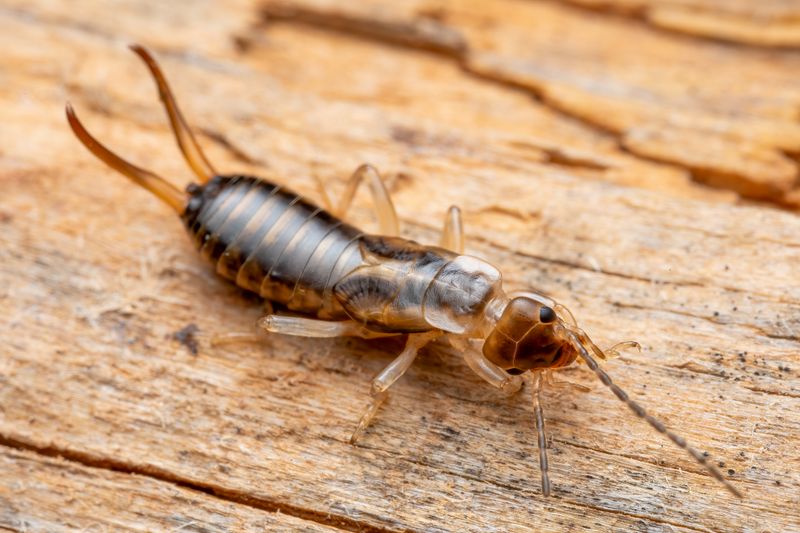
Despite their alarming reputation, earwigs are far less dangerous than folklore suggests. They do not crawl into ears, do not burrow into brains, and are not venomous. The pincers at the rear of their abdomen (called cerci) are used for defense and mating — not for harming humans, though a large one can deliver a mild pinch if handled.
That said, earwigs can damage garden plants, and a large invasion indoors is unpleasant. Here’s how to deal with them effectively.
What Are Earwigs?
Earwigs are dark brown, flattened insects with distinctive forceps-like pincers at their rear. They grow to about 3/4 inch in length. The common earwig (Forficula auricularia) is the species most often found in homes and gardens across North America.
Habitat preferences:
- Dark, cool, and moist environments
- Under mulch, rocks, logs, leaf litter, and dense plant material
- In soil and garden beds
- In damp areas of the home (basements, bathrooms, crawl spaces)
Earwigs are primarily outdoor insects. When they enter homes, it’s usually in search of moisture during dry weather or to overwinter.
Are earwigs harmful?
- They do not spread disease
- They don’t bite humans in normal circumstances
- They can damage soft plant tissue — hostas, lettuce, marigolds, and strawberries are favorites
- Indoors, they’re a nuisance, not a threat
Why Earwigs Are Entering Your Home
Earwigs come inside for two main reasons: moisture and light. During hot, dry summers or cold fall weather, they seek:
- The moisture near foundation walls, under siding, and in crawl spaces
- Light — they’re attracted to outdoor lighting, which draws them to entry points
- Overwinter shelter in wall voids and crawl spaces
Step 1: Eliminate Outdoor Harborage
Most earwig control happens outdoors, where populations are established.
Remove harborage near the foundation:
- Pull mulch back 12 inches from the foundation — mulch provides perfect earwig habitat
- Remove leaf litter, debris, and ground cover that stays moist
- Move woodpiles, stacked pots, and garden supplies away from the house
- Lift and remove flat stones near the foundation
Reduce moisture:
- Fix irrigation systems so they don’t wet the soil against the foundation
- Ensure gutters are functional and extend downspouts 6+ feet from the house
- Grade soil away from the foundation to direct water away
Moisture and Harborage Checklist
Earwig control works best when you remove the conditions that let them build up outside.
| Location | What to change |
|---|---|
| Foundation beds | Thin dense groundcover and keep mulch shallow |
| Gutters | Clean clogs so water does not spill into beds |
| Patio edges | Sweep leaves and soil out of cracks |
| Firewood | Store off the ground and away from exterior walls |
| Planters | Lift pots occasionally and dry the saucers |
If you still see earwigs after reducing harborage, the next step is perimeter treatment, not repeated indoor spraying. Indoor earwigs are usually wanderers from an outdoor population.
Step 2: Set Outdoor Earwig Traps
Earwig traps are highly effective at reducing outdoor populations near the home.
Rolled newspaper trap:
- Roll a sheet of newspaper into a tube shape and secure with a rubber band
- Dampen it slightly and place near known earwig areas (garden beds, against the foundation, under potted plants)
- In the morning (before earwigs return to soil), collect and submerge the newspaper in soapy water to kill trapped earwigs
- Repeat for several nights
Oil trap:
- Fill a shallow tuna can with vegetable oil with a drop of soy sauce
- Bury to soil level so earwigs crawl in and drown
- Empty and replace daily
Commercial sticky traps placed along the foundation also work well for monitoring and capture.
Step 3: Apply Perimeter Treatments
A perimeter insecticide spray along the foundation creates a barrier that kills earwigs as they attempt to enter.
Effective products:
- Ortho BugClear Insect Killer — ready-to-use spray for perimeter application
- Bifenthrin-based concentrate (Hi-Yield Bug Blaster, Talstar P) — apply around the foundation, 3 feet up the wall and 3 feet out
- Suspend SC (deltamethrin) — professional-grade residual that lasts 4–6 weeks
Apply in the evening when earwigs are active. Reapply after heavy rain.
Granular perimeter treatment: Apply pyrethrin-based granules or diatomaceous earth in a band around the foundation perimeter. Granular formulations last longer than sprays.
Step 4: Use Diatomaceous Earth
Diatomaceous earth (DE) is effective in the garden and around foundation entry points. Apply a thin layer:
- Along the foundation perimeter (inside and outside)
- In garden beds around vulnerable plants
- Under mulch that can’t be removed entirely
- Around deck boards and under outdoor furniture
DE must be kept dry to remain effective — reapply after rain.
Step 5: Seal Entry Points
If earwigs are entering the home, seal their access:
- Caulk gaps around ground-level windows and door frames
- Install door sweeps on exterior doors
- Repair crawl space vent screens
- Seal around utility entry points at the foundation
Step 6: Reduce Outdoor Lighting
Earwigs are attracted to outdoor lights, which draw them to the perimeter of your home.
- Switch porch and exterior lights to yellow or sodium vapor bulbs (less attractive to insects)
- Use motion-activated lights instead of always-on fixtures
- Keep interior lights off in rooms adjacent to entry points at night
Step 7: Indoor Treatment
If earwigs are inside:
- Vacuum them up — place the vacuum bag immediately in an outdoor trash can
- Apply diatomaceous earth along baseboards in damp areas
- Fix moisture sources — repair any leaks, improve ventilation in bathrooms
- Use sticky traps in bathrooms, basement, and crawl space access areas
Earwigs rarely establish indoors — those found inside are typically wanderers that will die without the outdoor moisture they require.
Earwig Damage in the Garden
In the garden, earwigs can damage:
- Soft-leafed plants: Hostas, marigolds, dahlias, lettuces, strawberries
- Seedlings: Young plants are particularly vulnerable
- Fruit: Soft fruit like strawberries and raspberries
To identify earwig feeding vs. other pests:
- Earwig damage appears as irregular holes in leaves, often with a jagged edge
- You’ll often find earwigs hiding nearby during the day under leaves, boards, or pots
Garden control:
- Apply diatomaceous earth around affected plant bases
- Set oil traps nearby
- Use Spinosad-based organic insecticides for heavier infestations in the garden
- Wrap pot bases with petroleum jelly or copper tape to prevent earwigs from climbing
Recommended Products
- Harris Diatomaceous Earth — for foundation perimeter and garden
- Catchmaster Pest Traps — outdoor sticky traps for perimeter monitoring
- Ortho BugClear — ready-to-use perimeter spray
Prevention Checklist
- Pull mulch 12 inches from the foundation
- Fix gutters and grade soil away from foundation
- Seal exterior gaps and install door sweeps
- Switch exterior lights to yellow bulbs
- Set trap cans in the garden beds
- Apply perimeter spray in spring and fall
Bottom Line
Earwigs are primarily an outdoor pest that occasionally invades homes in search of moisture. The most effective control focuses on the outdoor perimeter: reduce moisture, remove harborage, and apply a residual perimeter spray or diatomaceous earth barrier. Earwigs found indoors are usually incidental invaders — vacuum them up and seal entry points to prevent recurrence.

Kevin Larrabee
Independent trade-focused editorial team