How to Get Rid of Groundhogs: Trapping, Exclusion, and Repellents
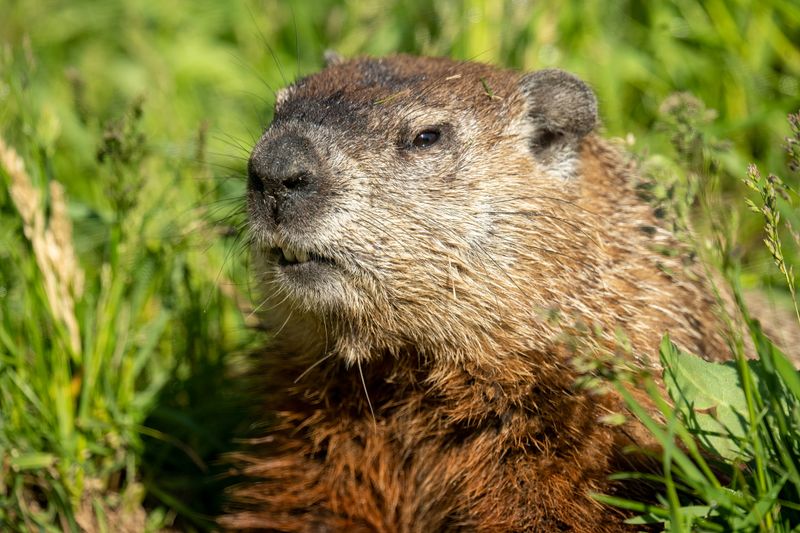
Groundhogs (also called woodchucks, Marmota monax) are large, burrowing rodents found throughout the eastern United States and Canada. They’re surprisingly destructive: a single groundhog can consume 1–1.5 pounds of vegetation per day, devastate vegetable gardens, and undermine foundations and decks with extensive burrow systems.
Here’s how to control them effectively.
Understanding Groundhog Behavior
Activity pattern: Groundhogs are active during the day, primarily in early morning and late afternoon. They hibernate from late October through February–March (depending on latitude and temperature).
Burrows: The defining characteristic of groundhog activity. Burrows have a main entrance (about 10–12 inches wide) with loose excavated soil in front. The tunnel system can extend 5+ feet deep and 25+ feet long. Look for secondary entrances (often well-camouflaged with less visible soil) near the main burrow.
Diet: Almost entirely plant-based — vegetables, legumes, fruits, grasses, clover, and garden herbs. They’re particularly destructive in vegetable gardens and for ornamental plants near burrows.
Burrow damage to structures: Groundhogs frequently burrow under decks, patios, foundations, and sheds. The tunneling can undermine structural concrete and create drainage problems.
Step 1: Confirm You Have Groundhogs
Signs of groundhog activity:
- Large burrow entrance(s) with excavated soil
- Plant damage with large, cleanly bitten stems (groundhogs bite cleanly; rabbits leave a 45-degree angled cut)
- Sightings during early morning or late afternoon
- Worn path from the burrow entrance to the garden area
Step 2: Live Trapping
Live cage trapping is the most widely used and effective removal method for groundhogs.
Trap selection: Use a large live trap designed for groundhogs or woodchucks — not a standard rabbit trap. The minimum appropriate size is approximately 10 x 12 x 32 inches.
Best option: Havahart 1045 Large 1-Door Live Animal Trap — sized appropriately for groundhogs; sturdy and reliable.
Bait: Groundhogs respond well to:
- Fresh vegetables they’re already eating from your garden (cantaloupe, sweet corn, lettuce, green beans)
- Clover and fresh clippings from the yard
- Vanilla extract applied to the back of the trap (some trappers swear by this)
Trap placement:
- Place the trap directly in front of the main burrow entrance
- Or place along the established path from the burrow to the garden
- Place just inside the burrow entrance (back of trap into the burrow) for the highest catch rate
- Stake the trap down so it doesn’t shift in use
After capture:
- Check the trap at least twice daily — groundhogs can become distressed quickly in confinement
- Transport immediately to a release site
Legal considerations:
- Groundhogs are wildlife, and regulations on trapping and relocation vary by state
- Most states allow homeowners to trap nuisance groundhogs on their own property without a permit
- Many states restrict or prohibit relocation — check your state wildlife agency regulations before releasing anywhere other than your own property
- Release on private land at least 5 miles from your home — otherwise they’ll return or be a problem for neighbors
Legal and Humane Trapping Checklist
- Confirm trapping and relocation rules with your state wildlife agency
- Get written permission for any release site if relocation is allowed
- Set traps in shade so a captured animal does not overheat
- Check traps at least twice daily, and more often in hot weather
- Close traps when you cannot monitor them
- Do not separate dependent young from an active burrow in spring or early summer
If the rules are unclear, hire a licensed wildlife control operator. Wildlife work is regulated differently from ordinary insect pest control, and illegal relocation can spread disease or create a problem on someone else’s property.
Step 3: Fencing
A properly installed fence is the most reliable long-term solution to keep groundhogs out of a garden or specific area.
Effective fence design:
- Material: Hardware cloth (2-inch mesh) or welded wire; at least 3 feet tall above ground
- Underground portion: The most critical component — bend the fence outward at a 90-degree angle underground, buried 12 inches deep with the L extending 12 inches outward (away from the garden). This prevents groundhogs from digging underneath.
- Flexible top: Leave the top 12 inches of the fence unsupported (not attached to posts) so it wobbles and discourages climbing
This “L-shaped” underground barrier is used for groundhogs, rabbits, and all digging pests.
Electric fence: A single-strand electric fence at 4–6 inches above the ground (powered by a solar or AC fence charger) is highly effective and easier to install than buried hardware cloth. Groundhogs touch the fence once and typically don’t return.
Products:
- Zareba 10-Mile Solar Fence Charger — low cost, reliable for small perimeters
- Gallagher S17 Solar Fence Energizer — commercial quality for larger areas
Step 4: Repellents
Repellents are the least reliable approach but may supplement other methods or discourage groundhogs from new areas.
Castor oil granules: Applied around garden perimeters and burrow entrances; some evidence of deterrent effect. Mole-Max by Bonide and Repels-All Animal Repellent granules are widely used.
Predator urine: Coyote urine applied around the garden perimeter may temporarily deter groundhogs. Requires frequent reapplication, particularly after rain.
Ammonia: Pouring ammonia down active burrow entrances can temporarily discourage occupation but does not permanently solve the problem.
Step 5: Exclude Burrows Under Structures
If groundhogs are burrowing under a deck, shed, or foundation:
- Trap and remove all groundhogs from the burrow (check for several consecutive days with no new activity before sealing)
- Partially fill the burrow entrance with loose soil or leaves (if the burrow collapses in, there are no groundhogs left)
- Install an L-shaped hardware cloth barrier around the entire perimeter of the structure, extending underground with the L foot pointing outward
Never seal a burrow with groundhogs inside — they’ll die in the structure (odor problem) or dig a new exit into your home.
When to Call a Professional
- Multiple groundhogs on the property
- The burrow is under the foundation or structural elements requiring careful access
- You’re not comfortable with live animal handling
- State regulations require a licensed trapper
Coexistence and Deterrence
In rural areas, if groundhogs aren’t actively damaging your garden or structures, they’re actually beneficial — their burrows are used by many wildlife species, and they’re an important prey species for foxes, coyotes, and raptors. If groundhogs are on the property boundary but not causing active damage, consider tolerating them or installing targeted fencing only around specific garden areas.
Prevention Checklist
- Fence vegetable gardens with L-shaped buried hardware cloth or electric fence before groundhog season (March–April)
- Install hardware cloth barrier under decks and sheds
- Eliminate brush piles and tall grass near the structure (reduces attractiveness as shelter)
- Check and re-bait live traps at least twice daily if trapping
- Verify state regulations on trapping and relocation before proceeding
Bottom Line
Live trapping and targeted fencing are the most effective groundhog management approaches. Trapping quickly removes an established groundhog; fencing provides permanent exclusion from gardens and structures. The buried, L-shaped fence is the most reliable physical barrier. Electric fence is a faster installation with similar effectiveness. Repellents alone are not sufficient for established, persistent groundhogs. Check state regulations on trapping before you start, and verify all occupants have left a burrow before sealing it.

Kevin Larrabee
Independent trade-focused editorial team