How to Get Rid of Grubs in Your Lawn
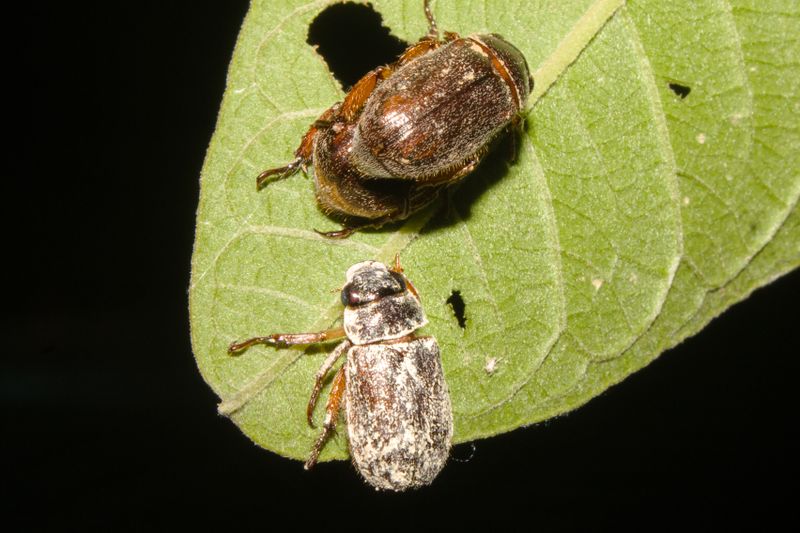
If you’ve pulled back brown, dead patches of lawn and found the turf rolls up like a carpet — with the soil underneath revealing fat, white, C-shaped larvae — you have a grub problem. Grubs are the larval stage of several beetles, and they feed on grass roots, causing dead patches that expand through summer and fall.
The good news: grub control is one of the more straightforward lawn pest problems to solve — if you treat at the right time.
What Are Lawn Grubs?
Lawn grubs are the larvae of several species of beetles, most commonly:
Japanese beetle (Popillia japonica):
- The most destructive grub species in the eastern U.S.
- Adult beetles emerge in June–July, feed on ornamental plants (roses, linden trees, grapes), and lay eggs in lawn soil in July–August
- Eggs hatch into small larvae that feed on grass roots through late summer and fall
- Overwinter deep in the soil, resume feeding in spring, then pupate in late spring
- Adult beetles emerge again in June
June bug / May bug (Phyllophaga species):
- Native species; common throughout the U.S.
- Adults emerge in May–June; lay eggs in lawn soil
- Larvae feed through summer and fall; three-year life cycle (compared to one year for Japanese beetles)
European chafer, Oriental beetle, masked chafers: Additional species, each with slightly different timing.
How to identify grubs:
- C-shaped, creamy white larvae with brown heads and six small legs
- 3/4 to 1 inch long (Japanese beetle grubs)
- Found 1–3 inches below the soil surface in affected areas
Signs of grub damage:
- Irregular brown, dead patches in the lawn in late summer (August–October)
- Dead patches that can be lifted like carpet (roots destroyed)
- High mole activity (moles feed on grubs)
- Birds (starlings, crows, robins) probing the lawn
- Skunks and raccoons digging in the lawn at night
Confirming Grub Damage
The sod cut test: In a suspected area, use a spade to cut a 12-inch x 12-inch section of sod and flip it back. Count the grubs in the top 3 inches of soil.
Damage thresholds:
- 5–10 grubs per square foot: Significant damage possible; treatment warranted
- Less than 5 per square foot: Healthy turf typically tolerates this level without significant damage
- 10+ grubs per square foot: Treatment essential
Timing: The Most Important Factor
Timing is critical — grub treatments are dramatically more effective against young, small larvae than against large, mature grubs.
The treatment window for Japanese beetles:
- July–August: Eggs hatch; young, first-instar larvae are near the soil surface and vulnerable
- September–October: Larger larvae, still somewhat controllable with curative products
- Late fall / winter: Larvae move deep into the soil; no effective treatment
- Spring: Larvae return to surface briefly before pupating — some curative treatments applicable
- Prevention (May–June): Apply before eggs are laid; preventive products protect through egg-laying and hatching
Treatment Option 1: Preventive Grub Control (Most Effective)
Preventive products are applied before eggs are laid (May–June) and break down as eggs hatch, killing young larvae.
Best Preventive Product: Scotts GrubEx
Active ingredient: Chlorantraniliprole Application timing: May–June (before Japanese beetles begin egg-laying) Duration: Season-long protection
GrubEx is the most widely used consumer grub preventive. Chlorantraniliprole has low toxicity to birds, mammals, and beneficial insects, and provides excellent season-long control when applied at the right time.
How to apply:
- Apply to the lawn with a spreader at the recommended rate
- Water in thoroughly immediately after application (1/2 inch of water)
- A single spring application protects through the entire hatching season
Price: $$ (5,000 sq ft bag, approx. $25–$35)
Alternative: Bayer Grub Killer Plus (imidacloprid) — another effective preventive; apply in May–June and water in.
Treatment Option 2: Curative Grub Control (For Active Infestations)
If grubs are already damaging your lawn (visible damage in August–October), use a fast-acting curative product.
Best Curative Product: BioAdvanced 24 Hour Grub Killer Plus
Active ingredient: Trichlorfon Works on: All grub species; effective against larger, mature grubs Timing: August–September (while damage is occurring)
Apply according to label directions and water in thoroughly. Provides kill within 24–48 hours for surface-active grubs.
Note: Trichlorfon has higher mammalian toxicity than preventive products — follow label safety directions and keep pets off the lawn until watered in and dry.
Price: $$ (10 lbs, approx. $25–$35)
Option 3: Organic/Natural Grub Control
Beneficial Nematodes
Beneficial nematodes (Steinernema feltiae or Heterorhabditis bacteriophora) are microscopic roundworms that parasitize grub larvae. They’re OMRI-listed for organic use.
Application:
- Mix with water and apply in the evening (nematodes are killed by UV)
- Apply to moist soil at 50°F+ soil temperature
- Water the lawn before and after application
- Must be used when fresh — nematodes die quickly; refrigerate until use
Best species for grubs: Heterorhabditis bacteriophora (Hb nematodes) are most effective against Japanese beetle grubs.
Apply in: Late August through September, when grubs are small and near the surface.
Best products: NaturesGoodGuys Live Beneficial Nematodes (Hb + Sc mixed species)
Effectiveness: Moderate — nematodes require specific conditions (moist, warm soil) and have shorter residual than chemical options. Plan for 40–60% reduction under good conditions.
Milky Spore (Bacillus popilliae)
A naturally occurring soil bacterium that infects and kills Japanese beetle grubs specifically. Multiplies in the soil over time.
The important caveat: Milky spore requires 2–3 years to establish in the soil at effective levels, and works only on Japanese beetle grubs — not other species.
Best products: St. Gabriel Organics Milky Spore Lawn & Garden Pest Control (granular form)
Lawn Repair After Grub Damage
After successful grub treatment, the dead patches won’t recover on their own — the root systems are gone.
Repair steps:
- Rake out dead grass and debris
- Loosen the top 1–2 inches of soil with a garden rake
- Apply a starter fertilizer
- Seed with the appropriate grass species for your region
- Keep moist until germination (1–3 weeks depending on species and temperature)
- Consider sod for large dead patches where a quick, no-fail repair is needed
Timing Summary
| Month | Action |
|---|---|
| May–June | Apply preventive grub control (GrubEx or imidacloprid) and water in |
| July | Monitor for adult beetle activity; check for early grub presence in August |
| August–September | Apply curative treatment if 5+ grubs/sq ft are found |
| September | Apply nematodes as organic alternative |
| October | Repair dead patches with seed or sod |
| Following May | Reapply preventive treatment for ongoing protection |
Prevention Checklist
- Apply GrubEx in May–June annually if you’ve had grub problems
- Water in all grub treatments immediately and thoroughly
- Monitor for Japanese beetle adults in June–July (they target your ornamental plants)
- Check for grub activity in August by cutting sod in suspicious areas
- Overseed or patch dead areas in September–October after successful treatment
Bottom Line
Lawn grub control is highly timing-dependent. A preventive application of GrubEx (chlorantraniliprole) applied in May–June and watered in is the most effective and lowest-effort approach — it protects through the entire egg-laying and hatching season. For active late-summer infestations (visible damage in August–September), a curative product like BioAdvanced 24 Hour Grub Killer provides fast results. Repair dead patches after successful treatment — the grass won’t regenerate on its own once roots are destroyed.

Kevin Larrabee
Independent trade-focused editorial team