How to Get Rid of Mice: Traps, Baits, and Exclusion
Quick answer
Mouse control works best by combining exclusion, sanitation, and trapping. Bait or traps alone will not solve the problem if entry gaps, food sources, and nesting areas remain.
Common questions
- What is the first step to get rid of mice?
- Find and seal entry points, especially gaps around doors, pipes, vents, siding, and the foundation. Then place traps along walls and travel paths where droppings or rub marks appear.
- Why do mice keep coming back?
- They return when openings, food, water, or nesting material are still available. Long-term control depends on exclusion and sanitation, not just catching a few mice.
Source note: Reviewed July 2026 against the article guidance and integrated pest management principles; product labels, local regulations, pest species, and site conditions control treatment choices.
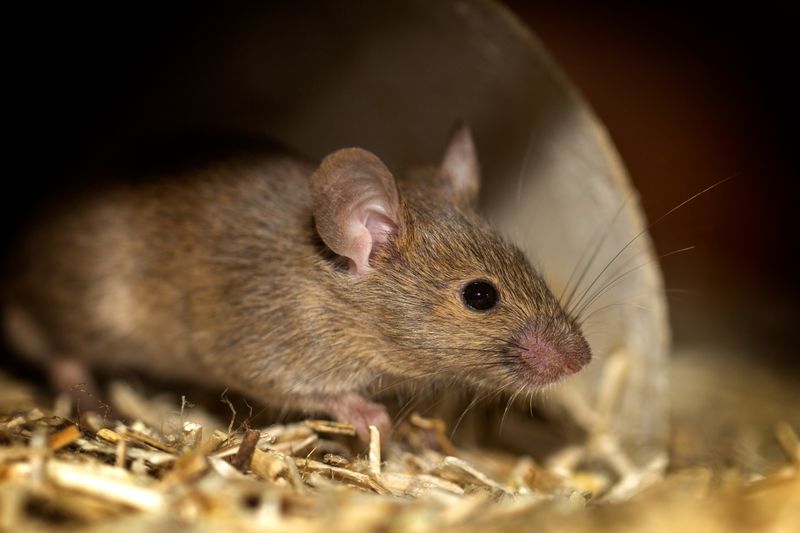
A single mouse in your home can quickly become a major infestation. A female house mouse reaches sexual maturity in just 6 weeks and can produce 5–10 litters per year, with 5–6 pups each. That means one mouse can theoretically become dozens within a few months.
Beyond numbers, mice pose real health risks — they contaminate food, leave droppings across surfaces, and are capable of spreading diseases including hantavirus, salmonella, and leptospirosis. They also chew through electrical wiring, insulation, and drywall.
This guide covers how to identify a mouse problem, set up an effective trapping program, use rodenticide bait safely, and seal your home against future invasions.
Signs You Have Mice
Droppings
The most common sign. Mouse droppings are small (1/4 inch), dark, and tapered at the ends — resembling a grain of rice. Fresh droppings are shiny and dark; older ones are dull and grayish. You’ll find them along walls, in kitchen cabinets, behind appliances, in drawers, and in pantry areas.
Because size, moisture, and camera angle can mislead, use our mouse vs. rat droppings comparison and safe cleanup checklist before choosing trap size or disturbing the evidence.
Gnaw Marks
Mice chew constantly to keep their teeth trimmed. Look for gnaw marks on:
- Food packaging (cereal boxes, bags of chips, dog food bags)
- Wood along the base of doors and cabinets
- Electrical wiring (a serious fire hazard)
- Cardboard boxes in storage areas
Nesting Material
Mice build nests from shredded paper, fabric, insulation, and other soft materials. Check inside drawers, behind appliances, in wall voids near heat sources, and in attic insulation.
Sounds
Scratching, scurrying, or squeaking in walls, ceilings, or under floorboards — especially at night.
Runways
Mice follow the same paths repeatedly, leaving greasy rub marks along walls and baseboards where their oily fur contacts surfaces.
Odor
Active mouse infestations produce a distinctive musky ammonia smell from urine accumulation.
Step 1: Set Up Snap Traps
Snap traps are the fastest, most cost-effective way to reduce a mouse population. Properly set, they kill immediately and are easy to check and reset.
How to set snap traps effectively:
Placement is everything. Mice travel along walls and rarely cross open spaces. Place traps:
- Along walls with the trigger end touching the wall
- Behind appliances (refrigerator, stove, dishwasher)
- Inside kitchen and bathroom cabinets
- In the attic near nesting areas
- Along the basement perimeter
Bait: Peanut butter is the most effective lure — its smell carries well and its stickiness requires mice to work for it, triggering the snap mechanism. Alternatives include chocolate, nesting material, or a cotton ball smeared with hazelnut spread.
Quantity: More traps = faster results. Set at least 6–10 traps in different locations rather than 1–2. Mice are cautious initially — rotate and reposition traps that aren’t catching anything after 3 days.
Victor Original Mouse Trap (the classic wooden snap trap) is the most trusted, widely available option. Tomcat Snap Traps offer a no-touch design if you prefer not to handle dead mice directly.
Catch and Release: Effective or Not?
Live-catch traps (catch mice alive for release) are a humane option, but they require releasing mice at least 2 miles from your home — otherwise they return. Live traps also require daily checking and proper release protocols to avoid disease exposure.
Step 2: Electronic Mouse Traps
Electronic traps kill mice instantly with a high-voltage shock — faster than snap traps and require no contact with the rodent.
Victor Electronic Mouse Trap (M2524) is the most popular model. It holds up to 10 mice between resets and has an indicator light that signals a catch without requiring you to open the trap.
Best for: Homeowners who dislike the reset process of snap traps, homes with children or pets (electronic traps are enclosed), or anyone dealing with a moderate to heavy infestation.
Step 3: Rodenticide Bait (Use Carefully)
Rodenticide bait can eliminate a large population quickly, but it carries significant risks:
- Secondary poisoning: Pets and predatory birds can be poisoned by eating a mouse that has consumed rodenticide
- Mice die in walls: Rodenticide-killed mice often die inside walls, creating odor problems that last weeks
- Non-target risk: Children and pets may access bait stations if not secured properly
If you use rodenticide:
- Use tamper-resistant bait stations only — open bait blocks are never appropriate
- Place stations in areas inaccessible to children and pets
- Use first-generation anticoagulants (warfarin, chlorophacinone) or bromadiolone — less persistent in the food chain than second-generation options
- Never use loose bait blocks without a locked station
Tomcat Mouse Killer Bait Stations and Victor Pestchaser Rodent Repeller (combined with bait) are widely available options.
Step 4: Exclusion — Stop Mice from Entering
Trapping eliminates the mice inside, but without exclusion, new mice will continue to enter. Mice can squeeze through a gap as small as a dime (1/4 inch).
Common entry points:
- Gaps around pipes under kitchen and bathroom sinks
- Gaps where utilities enter through the foundation or siding
- Damaged or missing weatherstripping under exterior doors
- Gaps in garage door seals
- Crawl space vents without intact screens
- Foundation cracks
- Gaps around the chimney
How to seal mouse entry points:
Steel wool + caulk or foam: Stuff steel wool into gaps around pipes, then seal over it with caulk or foam sealant. Mice can’t chew through steel wool. DAP Fireblock Foam and Xcluder Rodent Control Fill Fabric are professional-grade exclusion materials.
Weatherstripping: Replace worn or damaged door sweeps and weatherstripping. Use door sweeps with a metal base that mice can’t chew through.
Hardware cloth: Use 1/4-inch hardware cloth to screen crawl space vents, attic vents, and weep holes. Attach with screws and washers, not staples.
Expandable foam alone is not sufficient — mice chew right through most foam products.
Step 5: Clean Up and Sanitize
After eliminating mice, thorough cleanup is essential to remove contaminated materials and eliminate the pheromone trails that attract new mice.
Safe cleanup procedure:
- Ventilate the area for at least 30 minutes before cleaning
- Do NOT sweep or vacuum mouse droppings — this aerosolizes particles and increases disease risk
- Wear latex or rubber gloves and a respirator or N95 mask
- Spray droppings with a 10% bleach solution or EPA-registered disinfectant; let soak for 5 minutes
- Wipe up with paper towels and double-bag in plastic bags
- Wash hands thoroughly after removing gloves
- Dispose of nesting material the same way
- Disinfect all affected surfaces
How Long Does It Take to Get Rid of Mice?
With proper trapping and exclusion:
- Light infestation (1–3 mice): 1–2 weeks
- Moderate infestation: 3–6 weeks
- Heavy infestation: 6–12+ weeks, may require professional help
If you’re catching mice consistently for more than 3 weeks, you likely have an ongoing entry point that hasn’t been sealed.
When to Call a Professional
- You’re catching many mice but populations don’t decline
- You suspect mice in walls, ceilings, or crawl spaces with inaccessible nesting areas
- You have a compromised immune system or young children and need rapid resolution
- The infestation involves rats rather than mice (requires different treatment)
- You cannot identify or seal entry points
Prevention Checklist
- Seal all gaps larger than 1/4 inch around the exterior
- Replace worn door sweeps and weatherstripping
- Store all food in hard-sided, airtight containers
- Keep pet food in sealed containers; don’t leave food out overnight
- Eliminate clutter in garages, attics, and basements
- Move firewood and debris piles away from the house
- Set 2–4 snap traps seasonally in garage and basement as a monitoring measure
Bottom Line
Getting rid of mice requires a multi-pronged approach: snap traps to reduce the current population quickly, exclusion to stop new mice from entering, and sanitation to remove attractants. Electronic traps and bait stations add options for heavier infestations. Most homeowners can resolve a minor to moderate infestation in 2–4 weeks with consistent effort. If you’re not making progress, a licensed pest control company can perform a full exclusion inspection and targeted treatment.

Kevin Larrabee
Independent trade-focused editorial team