How to Get Rid of Mosquitoes in Your Yard
Quick answer
Yard mosquito control starts with removing standing water, improving drainage, trimming dense vegetation, and targeting breeding sites. Adult sprays can reduce activity briefly, but they do not replace source reduction.
Common questions
- What is the fastest way to reduce mosquitoes?
- Dump standing water from buckets, saucers, toys, gutters, tarps, and low spots, then treat unavoidable water with a labeled larvicide when appropriate. Source reduction cuts future adults.
- Do mosquito yard sprays solve the problem?
- They can temporarily reduce adult mosquitoes, but new mosquitoes can emerge or fly in if breeding sites remain. Use sprays carefully around pollinators, pets, and water.
Source note: Reviewed July 2026 against the article guidance and integrated pest management principles; product labels, local regulations, pest species, and site conditions control treatment choices.
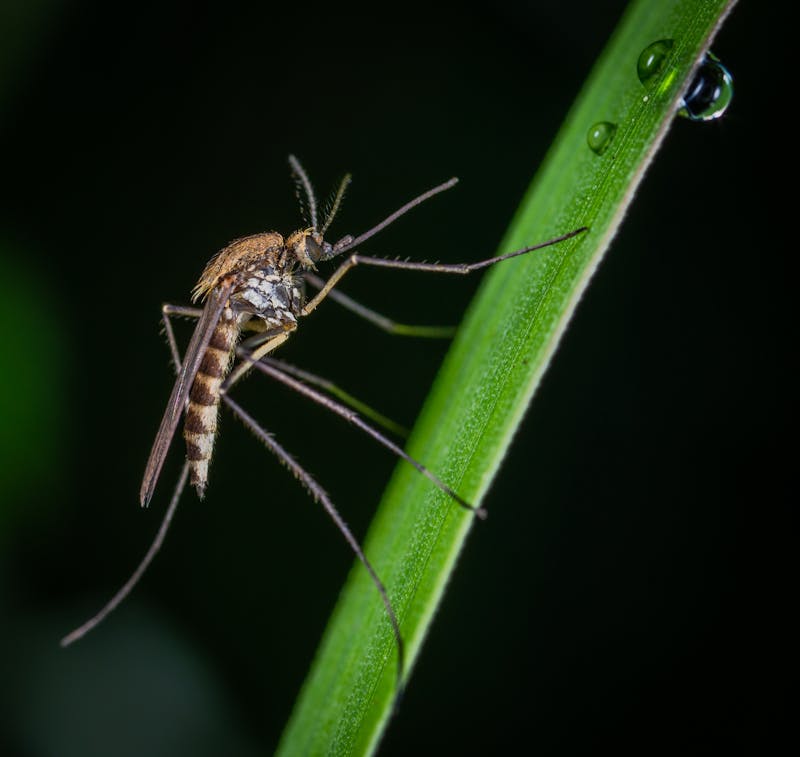
Mosquitoes don’t just ruin outdoor gatherings — they’re vectors for West Nile virus, Eastern equine encephalitis, and (in some regions) dengue and Zika. Effective yard mosquito control reduces both the nuisance and the health risk for your family.
This guide covers the full mosquito control toolkit, ranked from highest to lowest long-term impact.
Step 1: Eliminate Standing Water (Highest Impact)
Mosquitoes breed in standing water. A single container holding water for more than 7–10 days can produce hundreds of adult mosquitoes. Eliminating every standing water source is the most effective thing you can do.
Common breeding sites to eliminate or treat:
- Bird baths: Change water every 3–5 days, or add a pump/fountain to keep water moving (mosquitoes can’t breed in moving water)
- Flower pot saucers: Empty after every rain
- Clogged gutters: Clean twice a year; standing water in gutters is a major breeding source
- Tarps and covers: Ensure they’re taut so water doesn’t pool
- Wheelbarrows, buckets, and containers: Store inverted or indoors
- Children’s toys and play equipment: Check for standing water after rain
- Low areas in the lawn: Address with topsoil or drainage solutions
- Rain barrels: Cover with tight-fitting lids or fine mesh screens
- Swimming pool: Maintain proper chlorination or treat with BTI if unused
Walk your property after every rainfall and tip, toss, or treat anything holding water.
Step 2: BTI Treatment for Unmovable Water Sources
Some water sources can’t be eliminated — decorative ponds, rain barrels, drainage ditches, tree holes. BTI (Bacillus thuringiensis israelensis) is a naturally occurring soil bacterium that kills mosquito and black fly larvae while being completely safe for people, pets, fish, and wildlife.
Mosquito Dunks (Summit Responsible Solutions) are donut-shaped discs containing BTI concentrate — one Dunk treats 100 square feet of water for up to 30 days.
Mosquito Bits are granular BTI for smaller containers, puddles, and drainage areas. Apply within 24 hours after rainfall when new standing water appears.
Where to use BTI:
- Ornamental ponds and water features
- Rain barrels
- Tree holes
- Drainage ditches and swales
- Any container that can’t be emptied
BTI is safe for all non-target organisms and is OMRI-listed (approved for organic use). It’s the preferred method for water features where chemical treatments would be inappropriate.
Step 3: Thermacell Devices
Thermacell devices create a personal protection zone using metofluthrin, a synthetic pyrethroid that repels mosquitoes but disperses rapidly and doesn’t harm beneficial insects or pollinators significantly at normal use levels.
How Thermacell works: A fuel-cell heated mat vaporizes metofluthrin, creating a repellent zone in still-air conditions.
Top Thermacell products:
Thermacell Radius Zone Repeller — Rechargeable (no butane), no open flame. Creates a 20-foot protection zone. Best for patios and decks.
Thermacell MR450 Armored Repeller — Butane-powered, weather-resistant. Ideal for camping, hunting, and outdoor work.
Thermacell Patio Shield Mosquito Repeller (E55) — More powerful, creates up to 20-foot zone. Best for sitting areas.
Effectiveness: Highly effective in calm to moderate wind conditions. Wind above 5 mph reduces effectiveness. Works best in enclosed or semi-enclosed outdoor areas (patios, decks).
Does not require DEET on skin — suitable for those who want to avoid skin contact with repellents while relaxing outdoors.
Step 4: Yard Mosquito Spray
Residual sprays applied to vegetation, shrubs, and shaded areas kill adult mosquitoes resting in these areas and provide protection lasting 2–4 weeks.
Effective yard sprays:
Bifen IT (bifenthrin concentrate) — Professional-grade pyrethroid diluted and applied with a hose-end sprayer to all foliage, shrubs, and lawn edges. One of the most effective and longest-lasting options.
Ortho Home Defense Backyard Mosquito Killer — Ready-to-attach hose-end spray; convenient but less economical than concentrate.
Cutter Backyard Bug Control (lambda-cyhalothrin) — 3-month residual claimed; effective when applied to dense vegetation.
Application tips:
- Spray after sunset when mosquitoes are most active and pollinators are least active
- Focus on the undersides of leaves (where mosquitoes rest during the day)
- Treat all shrub foliage, ornamental plantings, and lawn edges — especially shaded, damp areas
- Avoid spraying flowers — pollinators are harmed by direct pyrethroid exposure
- Reapply every 3–4 weeks or after heavy rain
Step 5: CO2 Mosquito Traps
Mosquito traps that attract and capture mosquitoes using CO2, heat, and chemical attractants can reduce the local adult population over a season of use.
Dynatrap DT1050 — Uses CO2 lure, UV light, and a quiet fan to capture mosquitoes in a basket. Silent, no chemicals required beyond the CO2 attractant.
Limitations: Traps are most effective when used continuously in a season-long campaign and should be placed away from seating areas (you don’t want to compete with the trap for attracting mosquitoes). They reduce populations but don’t eliminate them.
Best used as: A supplement to source elimination and yard spray, not a standalone solution.
Step 6: Mosquito Repellents for Personal Protection
When spending time outdoors:
DEET (N,N-Diethyl-meta-toluamide):
- Most studied, most reliable repellent
- 20–30% DEET provides full protection for most mosquitoes for 4–6 hours
- Higher concentrations (40%+) extend duration but not efficacy
- OFF! Deep Woods VIII (25% DEET) is widely available and highly effective
Picaridin:
- Effective as DEET; less oily feel
- Doesn’t dissolve plastics (DEET can damage plastic watch bands and synthetic fabrics)
- Sawyer Picaridin Insect Repellent is a top-rated option
IR3535:
- Effective against mosquitoes; particularly common in European formulations
- Avon Skin So Soft Bug Guard contains IR3535
Oil of Lemon Eucalyptus (OLE):
- Plant-based; the only CDC-recommended natural repellent
- Comparable to 15–25% DEET in effectiveness
- Repel Lemon Eucalyptus spray
Note: Citronella candles provide minimal protection in outdoor settings — the scent dissipates rapidly and protection radius is very small.
Mosquito Species Common in the U.S.
Understanding your local mosquito species helps target control efforts.
Aedes albopictus (Asian tiger mosquito): Aggressive daytime biter. Breeds in tiny water containers. Common in the Southeast and spreading northward. Primary target of container elimination.
Culex pipiens (Northern house mosquito): Primarily active at dusk and dawn. Breeds in stagnant water, particularly in storm drains and neglected pools. Primary vector of West Nile virus.
Aedes aegypti (Yellow fever mosquito): Primary vector of dengue, Zika, and chikungunya. Found in Southern states and spreading. Breeds in containers near homes.
Get Professional Mosquito Treatment
Many pest control companies offer seasonal mosquito treatment programs — typically monthly or bi-monthly spray applications throughout the mosquito season. Professional-grade products and equipment provide more thorough coverage than most DIY approaches.
Professional mosquito treatment is particularly worthwhile if:
- You have a heavily landscaped yard with dense vegetation
- You’re hosting outdoor events
- Mosquito populations are very high in your area
Before hiring a mosquito control provider, verify licensing, ask what products will be applied, and get the service schedule and retreatment terms in writing.
Prevention Checklist
- Empty, tip, or treat all standing water after rainfall
- Clean gutters twice yearly
- Add a fountain or pump to bird baths and ponds
- Apply BTI dunks to ornamental ponds and rain barrels
- Spray yard vegetation with bifenthrin every 3–4 weeks
- Use Thermacell or DEET when sitting outdoors
- Keep grass mowed and vegetation trimmed
Bottom Line
Mosquito control works best as a layered approach: eliminate standing water first (the source), apply BTI to water that can’t be eliminated, spray yard vegetation with a residual pyrethroid, and use Thermacell or DEET for personal protection. A yard free of standing water and regularly sprayed foliage will have a dramatically lower mosquito population. For large properties or special events, professional mosquito control services provide the most comprehensive coverage.

Kevin Larrabee
Independent trade-focused editorial team