How to Get Rid of Pantry Moths
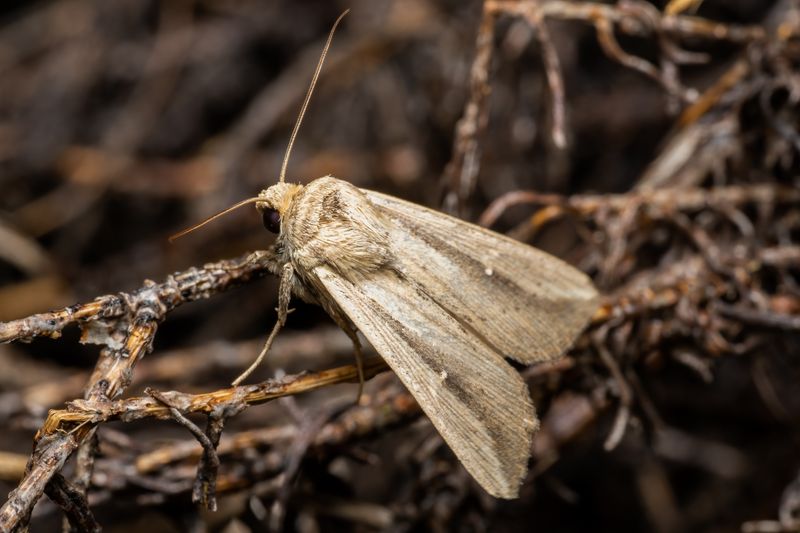
Opening your pantry to find moths flying out — or worse, discovering webbing and larvae in your flour or cereal — is an unsettling experience. Indian meal moths are the most common pantry pest in North America, and once they’ve established in your pantry, they spread quickly from one food item to another.
The good news: you can eliminate a pantry moth infestation completely with thorough inspection, disposal, cleaning, and the right traps. No pesticides needed.
Not sure whether the source is dry food or animal-fiber textiles? Start with our clothes moths vs. pantry moths comparison, which focuses on larvae, damage, inspection zones, and trap limits.
What Are Pantry Moths?
Indian meal moths (Plodia interpunctella) are small moths (about 5/8 inch wingspan) with distinctive reddish-brown and grayish wing markings. Adults are the flying stage — they don’t eat and live only about a week. It’s the larvae that cause the damage.
Life cycle:
- Adult moths lay tiny eggs in or near food products
- Eggs hatch in 2–14 days into larvae (small, off-white caterpillars)
- Larvae feed and spin silk webbing through food — this is the silky webbing you see in infested products
- Larvae pupate and emerge as adult moths
- Cycle repeats every 25–135 days depending on temperature
A moth problem can persist for months if the larval breeding sources are not fully eliminated.
What they infest:
- Flour, cornmeal, and other grains
- Cereals and granola
- Nuts and dried fruit
- Spices (especially paprika, chili powder, red pepper flakes)
- Pet food and birdseed
- Chocolate and candy
- Pasta and rice
- Dried herbs
Step 1: Inspect Every Single Item in Your Pantry
This is the most important step — and the most labor-intensive. Pantry moths can infest packaging that appears fully sealed. Eggs can be microscopic and invisible through clear plastic bags.
Remove everything from your pantry. Inspect each item by:
- Checking for webbing inside and around the package
- Looking for larvae (small white worms) or cocoons in corners of boxes
- Checking the seams and folds of packaging
- Smelling for a distinctive “moldy” odor
Inspect all of these:
- Every bag of flour, cornmeal, sugar, and grain
- All cereals and granola (including those thought to be sealed)
- All nuts and dried fruit
- All spice jars — especially red-colored spices
- Pet food bags and birdseed (extremely common source)
- Pasta, rice, and dried beans
- Any package that has been open for more than a few weeks
Pantry Moth Inspection Map
Work from most likely sources to the places people forget:
| Zone | What to inspect |
|---|---|
| Main pantry | Flour, cereal, rice, pasta, nuts, dried fruit, baking chocolate |
| Upper shelves | Old cake mixes, holiday baking supplies, rarely used grains |
| Pet area | Dog food, cat food, treats, birdseed, small animal bedding |
| Garage or mudroom | Bulk rice, grass seed, stored pantry overflow |
| Decorative storage | Dried corn, seed wreaths, bean jars, craft seeds |
Pheromone traps help you confirm adult activity, but they do not replace finding the infested food. If traps keep catching moths after cleaning, there is still a source somewhere.
Step 2: Throw Away Infested and Suspect Items
When in doubt, throw it out. Moth larvae can survive inside packaging that appears intact.
- Discard all obviously infested items in a sealed bag in your outdoor trash immediately
- Discard any open or partially open packages of grain-based foods if you’re unsure
- Check products you thought were immune — moths have been found in chocolates, nuts in shells, and sealed spice jars
This step feels wasteful, but keeping suspect items means the infestation continues.
Step 3: Deep Clean the Pantry
After removing all items:
- Vacuum every shelf, corner, and crack — pay particular attention to shelf corners, gaps between shelves and walls, and the underside of shelves where cocoons are often attached
- Wipe all surfaces with white vinegar — the acidity disrupts any remaining eggs and pheromone trails. Use a cloth dampened with undiluted white vinegar
- Inspect and clean shelf brackets and wall anchors — moths pupate in shelving hardware
- Caulk cracks in pantry walls and shelving joints where larvae can hide and pupate
- Inspect and clean the area around the pantry — larvae wander to pupate and can be found in ceiling corners, along baseboards, even inside light fixtures
Step 4: Set Pheromone Traps
Pheromone traps use synthetic female moth pheromones to attract and trap male adults, breaking the breeding cycle and monitoring for remaining activity.
Pantry Moth Traps by Safer Brand and TERRO Pantry Moth Traps are the most widely used options. These are non-toxic, child-safe sticky boards in a triangular housing.
How to use:
- Place one trap inside the pantry, one in the kitchen
- Replace every 3 months or when the sticky surface is full
- Pheromone traps catch male moths — if you’re catching males, there are females breeding nearby
- Use traps as a monitoring tool alongside source elimination, not as a standalone solution
Step 5: Restock with Airtight Storage
Restocking your pantry is an opportunity to set up a storage system that prevents future infestations.
Best containers for pantry moth prevention:
- Glass mason jars with lids — most effective, airtight, and visible
- OXO Good Grips POP Containers — airtight with a push-button seal, stackable
- Rubbermaid Brilliance storage containers — airtight, BPA-free
Storage rules:
- Transfer all flour, grains, cereals, and nuts immediately upon opening
- Freeze new dry goods for 1 week before storing (kills any eggs present at purchase)
- Keep birdseed and pet food in sealed metal or hard plastic containers — not the paper bags they come in
- Store spices in tightly sealed glass or metal containers
What About Pesticides?
For pantry moths, pesticides are generally unnecessary and counterproductive:
- The source of the infestation is always in food — spraying pesticides near food is hazardous
- Eliminating the food source and adult moths with traps is more effective
- No pesticide reaches larvae inside sealed packaging
The one exception: If you find evidence of moth activity in wall voids or areas outside the pantry (cocoons in ceiling corners far from the kitchen, for example), a brief application of a contact pyrethroid spray in those non-food areas may help.
How Long Does It Take to Eliminate Pantry Moths?
- With thorough cleanup and trapping: 4–8 weeks (one full life cycle)
- Pheromone traps will continue catching moths for several weeks after cleanup as the existing adult population dies off
- If you’re still catching large numbers after 8 weeks, there’s a breeding source you haven’t found
Common missed sources:
- Birdseed in the garage or near the house
- Pet food bags in a laundry room or garage
- A bag of rice or pasta pushed to the back of a cabinet
- Holiday baking items stored in another location
Prevention Checklist
- Freeze all new grain purchases for 1 week before storing
- Transfer opened products immediately to airtight containers
- Store birdseed and pet food in sealed hard containers outside the kitchen
- Place one pheromone trap in the pantry year-round as an early warning system
- Inspect the pantry monthly for signs of webbing or larvae
- Never store food in the original paper or thin plastic packaging long-term
Bottom Line
Pantry moths are frustrating, but they’re entirely controllable without pesticides. The key is thorough: inspect everything, discard anything suspect, deep-clean the pantry completely, and restock in airtight containers. Pheromone traps reduce and monitor the adult population. Most infestations clear completely within 4–8 weeks of this approach. Prevention — particularly freezing new dry goods and using airtight storage — makes a recurrence extremely unlikely.

Pest Control Insider Editorial Team
Independent trade-focused editorial team