How to Get Rid of Rats: Norway Rats, Roof Rats, and Trapping Guide
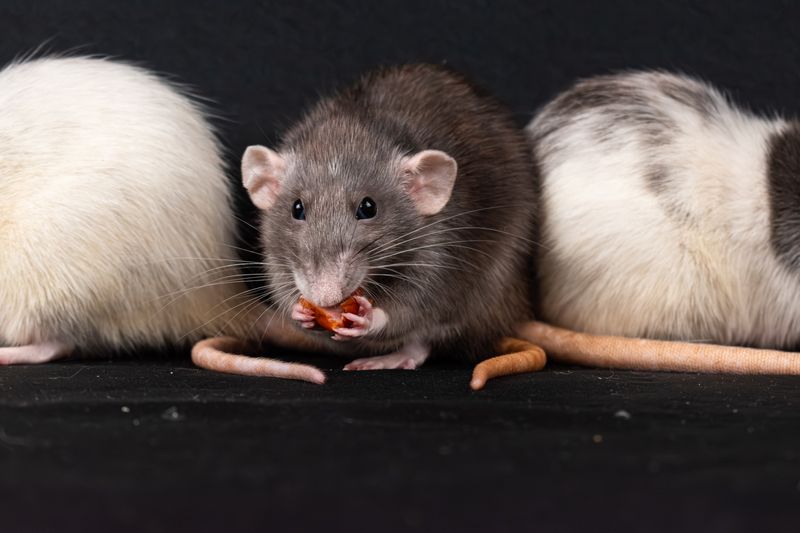
Rats are more serious than mice. They’re larger, smarter, more destructive, and can pose greater health risks. A single rat can gnaw through electrical wiring, PVC pipes, and structural wood. They’re also harder to control — rats are highly neophobic (suspicious of new objects in their environment), which makes trapping more challenging.
This guide covers the two primary species found in U.S. homes, how to trap and bait them effectively, and how to exclude them permanently.
Norway Rat vs. Roof Rat: Know the Difference
Treatment approach depends on which species you’re dealing with.
Norway Rat (Brown Rat, Rattus norvegicus)
Identification:
- Large, stocky body — up to 16 inches (with tail), weighing 7–18 oz
- Brown or gray fur on back, lighter belly
- Blunt, rounded nose
- Small ears (close to the head)
- Tail is shorter than body length
Behavior:
- Excellent burrowers — live underground along foundations, under debris, in basements
- Prefer ground-level travel; rarely climb
- Found throughout the U.S.
- Prefer protein and grain-based foods
Roof Rat (Black Rat, Rattus rattus)
Identification:
- Slimmer, more agile body — up to 16 inches (with tail), weighing 4–12 oz
- Black or dark brown fur
- Pointed, narrow nose
- Large, prominent ears
- Tail is longer than body length
Behavior:
- Excellent climbers — travel on fences, tree branches, utility lines, and reach roofs
- Prefer upper areas of structures: attics, rafters, wall voids
- Common in the Southeast, Gulf Coast, Pacific Coast states, and Hawaii
- Prefer fruits, nuts, and vegetables
Why it matters: Norway rats should be trapped at ground level (basement, behind appliances, along walls). Roof rats should be trapped at height (attic, along rafters, in wall voids near the roofline, on fence lines). Setting traps in the wrong location dramatically reduces effectiveness.
Signs of Rat Infestation
- Droppings: Larger than mouse droppings — Norway rat droppings are capsule-shaped (3/4 inch), roof rat droppings are banana-shaped (1/2 inch with tapered ends)
- Gnaw marks: Large, rough edges — distinct from the cleaner gnaw marks of mice
- Burrows: Norway rats burrow along foundations, under concrete slabs, and beneath debris
- Runways: Greasy rub marks along walls, baseboards, and fence lines from oils in rat fur
- Sounds: Scratching, squeaking, or movement in walls, attic, or under floors at night
- Nests: Shredded paper, insulation, and fabric in hidden areas
Step 1: Set Snap Traps
Snap traps are the most effective and humane DIY method for rats. However, rat traps must be much larger than mouse traps — use traps specifically labeled for rats.
Best rat snap traps:
- Victor Professional Rat Snap Trap — the classic wood-base trap; highly effective
- Tomcat Rat Snap Trap — plastic construction, no-touch release design
- T-Rex Rat Snap Trap — heavy-duty plastic with aggressive snap mechanism; excellent for larger rats
Baiting rat traps:
- Peanut butter is effective but should be used sparingly and pressed into the trigger mechanism so rats must tug it
- Nest material (cotton, dental floss, paper) attached to the trigger is highly effective — rats collect nesting material
- Chocolate, hazelnut spread, or dried fruit works well for roof rats
Placement and technique: Unlike mice, rats are suspicious of new objects. Place traps unset for 3–5 days, letting rats become accustomed to them. Then bait and set.
Place traps:
- Perpendicular to the wall with trigger end touching the wall
- Along the paths indicated by rub marks and droppings
- For roof rats: on rafters, along fence lines, and elevated entry points
- Set in pairs (two traps side by side along a runway)
- In dark, sheltered areas — inside boxes or PVC pipe tunnels for shy rats
Step 2: Electronic Rat Traps
Electronic traps kill rats instantly with a high-voltage shock. They’re enclosed, which prevents accidental contact, and many have no-touch disposal.
Victor Electronic Rat Trap (M230) is the most reliable consumer-grade electronic rat trap. It uses a bait cup inside the enclosed chamber and delivers a lethal shock. Indicator light shows when a catch has occurred.
Best for: Homeowners who want no contact with the dead rat, indoor use where open snap traps pose a risk to children or pets, or anyone dealing with smaller roof rats.
Step 3: Live Traps
Live-catch cage traps catch rats without harming them. They require regular monitoring (at least twice daily) and release of rats at least 2 miles from the structure.
Havahart Small Animal Live Trap (Model 1030) is appropriately sized for rats. Bait with peanut butter or fruit.
Important: Release rats in suitable habitat far from other homes. Rats released close to the capture site often return.
Step 4: Rodenticide Bait Stations
Rodenticide bait is effective for large populations but carries significant risks — particularly secondary poisoning of pets and raptors that may consume poisoned rats.
If using rodenticide:
- Use only tamper-resistant bait stations — never loose bait blocks
- Place stations only in areas inaccessible to children and pets
- First-generation anticoagulants (warfarin, diphacinone) have lower secondary poisoning risk than second-generation options (brodifacoum, bromadiolone) — choose these when possible
- Follow all label directions
Protecta LP Rat Bait Station is a professional-grade, tamper-resistant station suitable for both indoor and outdoor use.
Step 5: Exclusion
Without exclusion, any rats eliminated will be replaced by new rats from outside. Rats can squeeze through a gap as small as a quarter (1/2 inch).
Common rat entry points:
- Gaps around pipes entering through the foundation or walls
- Damaged or open vent covers on the roof and crawl space
- Gaps under garage doors (particularly where the rubber seal has deteriorated)
- Tree branches overhanging the roof (roof rat access)
- Gaps in roof fascia and soffit
- Open chimney caps
Exclusion materials:
- Hardware cloth (1/4 inch): For vent covers, crawl space openings, and large gaps
- Xcluder Rodent Control Fill Fabric: Professional-grade stainless steel wool that can be shaped into any gap
- Copper mesh: Similar to steel wool — stuff into gaps, then seal with foam or caulk
- Kick plates on the base of doors with gaps
- Trim tree branches that overhang the roof by at least 6 feet
Disease Risks
Rats carry numerous diseases transmissible to humans, most commonly through contact with droppings, urine, or nesting material.
Key diseases associated with rats:
- Hantavirus: Transmitted through inhalation of aerosols from droppings, urine, or nesting material. Primarily Norway rats in rural areas.
- Leptospirosis: Bacterial infection transmitted through rat urine contaminating water or soil.
- Salmonellosis: From rat droppings contaminating food or surfaces.
- Rat-bite fever: From bites or handling of rats.
Safe cleanup protocol: Ventilate area 30 minutes before cleaning. Wear gloves and a respirator. Never sweep or vacuum rat droppings. Spray with bleach solution (1:10), let soak 5 minutes, then wipe up with paper towels.
When to Call a Professional
- You’re catching rats consistently but populations don’t decline within 4 weeks
- Rats are in the attic or inaccessible wall voids
- You find burrows in the foundation or under the slab
- You’re not comfortable handling dead rodents or performing exclusion
- Children, elderly, or immunocompromised individuals are present (higher disease risk)
Prevention Checklist
- Seal all gaps larger than 1/2 inch on the exterior
- Cap the chimney and repair damaged roof vents
- Trim tree branches 6 feet from the roof
- Store all food in metal or hard plastic containers
- Keep garbage in sealed metal cans
- Eliminate water sources (fix leaks, empty standing water)
- Remove debris piles from against the house
- Store firewood off-ground and away from the house
Bottom Line
Rat control requires species identification, correctly placed and properly baited traps, and thorough exclusion. Norway rats require ground-level trapping; roof rats require elevated trapping near the roofline and attic. Electronic traps offer an effective, no-contact alternative. Rodenticide bait carries real secondary poisoning risks and should be used carefully. Without exclusion, trapping provides only temporary relief. For large populations or inaccessible infestations, a licensed pest control company is the most efficient path to resolution.

Kevin Larrabee
Independent trade-focused editorial team