Some links on this site are affiliate links. We may earn a commission at no cost to you. Learn more.
Integrated Pest Management (IPM) for Homeowners

Integrated Pest Management (IPM) is the gold standard for pest control among environmental scientists, public health agencies, and professional pest controllers. It’s not a single product or technique — it’s a systematic, decision-based framework for managing pests in the most effective, lowest-risk way possible.
For homeowners, IPM translates into a practical mindset: understand the pest and its needs, prevent what you can, monitor to catch problems early, and use targeted treatments when needed — reserving broad chemical applications as a last resort.
The Core Principles of IPM
1. Prevention First
IPM begins before there’s a pest problem. The most cost-effective pest control is preventing pests from entering or establishing in the first place.
Prevention strategies:
- Physical exclusion (sealing entry points)
- Habitat modification (removing food, water, and shelter sources that attract pests)
- Environmental management (reducing humidity, eliminating clutter, maintaining structural integrity)
A home with sealed entry points, stored food in airtight containers, and functional gutters will have dramatically fewer pest problems than a structurally identical home without these measures.
2. Monitoring and Identification
IPM requires knowing what you’re actually dealing with before acting. Accurate identification determines:
- Whether treatment is necessary at all (some pests are harmless or transient)
- What treatment is appropriate
- Where to focus treatment efforts
Monitoring tools for homeowners:
- Glue boards placed along baseboards, under sinks, and in the garage — capture insects and rodents for identification
- Trap counts — number of catches per week indicates population trend
- Regular inspection of known pest hotspots (pantry, basement, crawl space)
3. Define an Action Threshold
Not every pest requires treatment. IPM uses the concept of an “action threshold” — the level of pest presence that justifies treatment, based on economic, aesthetic, or health impact.
Examples:
- 1 mouse in the house: action threshold exceeded — treat immediately
- 2 ants on the kitchen counter: below threshold — monitor, check for food sources, clean
- 10+ ants per day on a trail: action threshold exceeded — bait and treat entry points
- 1 paper wasp nest under an eave away from foot traffic: may be below threshold for a household with no venom-allergic members
- Same nest near a frequently used entrance: above threshold — treat
The threshold varies by household. A family with a young child who has a bee venom allergy has different thresholds than a single adult with no health concerns.
4. Use the Least-Disruptive Effective Treatment
Once treatment is warranted, IPM prioritizes methods in order of impact:
Physical / mechanical controls first:
- Trapping (snap traps, glue boards, pheromone traps)
- Exclusion (sealing entry points)
- Physical removal (vacuuming, handpicking)
- Heat (for bed bugs, grain pests)
Biological controls:
- Beneficial insects (ladybugs for aphids, nematodes for soil pests)
- BTI for mosquito larvae
- Parasitic wasps for stored product pests
Chemical controls — targeted and specific:
- Gel bait (targeted, minimal exposure) before broad sprays
- Dust insecticides in wall voids rather than sprayed surfaces
- IGRs (insect growth regulators) to break breeding cycles
- Narrow-spectrum products before broad-spectrum
Broad-spectrum chemical application (foggers, whole-house perimeter spray) is reserved for situations where targeted approaches aren’t sufficient.
5. Evaluate Results and Adjust
After any treatment, evaluate effectiveness:
- Monitoring tools (glue boards, traps) show whether populations are declining
- Re-inspection after 2–4 weeks confirms success or identifies need for adjustment
- Adjust treatment location, product, or approach based on results
IPM in Practice: Common Pest Scenarios
Scenario 1: Kitchen Ants
Identification: Odorous house ants (most common) Prevention action: Seal gaps under the sink; store food in sealed containers; clean up spills immediately Monitoring: Observe trail pattern and entry point Action threshold: 5+ ants per day on a consistent trail = exceeded Treatment choice: Gel bait (TERRO) placed near the trail and entry point — targeted, no spray near food Evaluation: Monitor bait consumption and ant counts over 1–2 weeks
Scenario 2: Occasional Spiders in the Basement
Identification: Common house spider (harmless) Prevention: Remove clutter; vacuum webs Action threshold: 1–3 spiders per week = below threshold; 10+ per week or finding dangerous species = exceeded Treatment choice: For threshold exceeded — diatomaceous earth along basement perimeter, address underlying insect population (spiders’ food source)
Scenario 3: Cockroaches in the Apartment Kitchen
Identification: German cockroach Prevention action: Seal under-sink penetrations; eliminate moisture sources Monitoring: Glue boards in cabinet hinges and under sink Action threshold: Any confirmed sightings = exceeded (German cockroaches in a kitchen require immediate action) Treatment choice: Gel bait (Advion) + IGR (Gentrol) — highly targeted, minimal exposure Evaluation: Monitor glue board catch counts weekly
IPM Monitoring Tools for the Home
A small monitoring toolkit makes IPM practical:
- Glue boards ($10–$15 for a pack): Place quarterly in basement, kitchen, and garage. Review monthly.
- Pheromone pantry moth traps ($10–$15): Keep one in the pantry year-round as an early warning
- ClimbUp Bed Bug Interceptors ($25): Under each bed leg — early detection before an infestation establishes
- Victor snap traps (set but unbaited, or lightly baited): 2–3 in the garage as a monitoring measure
Total cost: Under $60 for a whole-home monitoring system that catches problems early.
IPM and Chemical Use
IPM doesn’t mean “no pesticides.” It means using pesticides precisely, in targeted locations, when monitoring indicates they’re necessary.
The contrast:
- Traditional: Apply a broad-spectrum perimeter spray on a quarterly schedule regardless of pest activity
- IPM: Apply targeted gel bait when glue boards show cockroach activity; apply perimeter spray in response to documented ant pressure; apply IGR when flea populations are confirmed
This targeted approach:
- Reduces total pesticide use significantly
- Reduces non-target exposure (children, pets, beneficial insects)
- Reduces pesticide resistance (targeted use is less selection pressure)
- Often reduces cost
IPM and Professional Pest Control
Ask any pest control company about their IPM approach. Quality pest control companies:
- Perform a thorough inspection before recommending treatment
- Identify the specific pest species
- Recommend targeted treatments appropriate to the infestation
- Perform follow-up monitoring
- Advise on prevention and structural modifications
Avoid companies that offer only periodic broad-spectrum spray applications with no inspection or monitoring component — this is the opposite of IPM.
Starting an IPM Program at Home
This month:
- Walk through the house and note all potential entry points (gaps around pipes, foundation cracks, door seal condition)
- Set up glue board monitoring in the kitchen, basement, and garage
- Address the top 3 most visible structural vulnerabilities (seal them)
This season:
- Install any missing weatherstripping or door sweeps
- Seal gaps around all utility penetrations under sinks
- Apply a perimeter spray if ant or insect pressure warrants it based on monitoring
Ongoing:
- Check monitoring boards monthly
- Inspect pantry and food storage quarterly
- Perform a full exterior inspection each spring and fall
Bottom Line
IPM is simply a better framework for pest control than reactive, broadcast chemical application. It emphasizes understanding the pest, preventing entry, monitoring to catch problems early, and treating with the least disruptive effective method when action is warranted. For homeowners, this translates into a modest investment in monitoring tools, exclusion materials, and targeted products — with significantly better long-term results and lower chemical exposure than traditional pest control approaches.
Get our free Pest Prevention Checklist — delivered to your inbox.
No spam. Unsubscribe anytime.
Recommended Product
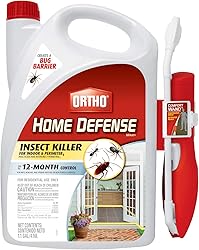
Ortho Home Defense Insect Killer
Creates a long-lasting bug barrier indoors and outdoors. Kills ants, roaches, spiders, and over 130 other insects on contact.
- ✓ Kills 130+ insects
- ✓ Indoor/outdoor use
- ✓ Comfort wand included
- ✓ Odor-free formula
As an Amazon Associate, we earn from qualifying purchases.
Get Your Free Pest Prevention Checklist
Join thousands of readers. Expert tips and guides delivered to your inbox — no spam, ever.
No spam. Unsubscribe anytime. View our Privacy Policy.
Need a Pest Control Pro? Get a Free Estimate
Connect with a certified local exterminator — no obligation.
Affiliate Disclosure
Some of the links on this page are affiliate links. If you click on one of these links and make a purchase, we may receive a small commission at no additional cost to you. This helps support our site and allows us to continue providing free content.
We only recommend products we believe in. All opinions are our own. We are a participant in the Amazon Services LLC Associates Program, an affiliate advertising program designed to provide a means for us to earn fees by linking to Amazon.com and affiliated sites.

Kevin Larrabee
Pest Control Specialist & Founder of Pest Control Insider