Best Ant Baits and Killers by Species (2026)
Quick answer
Identify the ant before buying bait. Use a slow-acting, label-listed formulation the workers accept, place and monitor it exactly as directed, and do not spray around it. Argentine, carpenter, and fire ants require different decisions; recurring activity, structural risk, or stings calls for professional help.
Common questions
- What is the best bait for Argentine ants?
- Argentine ants usually accept sweet liquid bait. UC IPM recommends a registered 0.5% to 1% borate liquid in refillable outdoor stations for a severe infestation; a current prefilled product label may support lighter indoor or entry-point use. Confirm that the exact label lists Argentine ants and your placement site.
- How long should ant bait take to work?
- Some household trails may decline in 5 to 10 days, while complete control can take several weeks. Carpenter-ant baiting can take longer, and broadcast fire-ant bait is slower than treating an individual mound. Use the product label and monitoring record to set the assessment date.
- Why are ants ignoring the bait?
- The formulation may not match their current food preference, or the bait may be stale, dry, contaminated, poorly placed, or competing with other food. Reposition or replace it according to the label and try a different labeled formulation instead of adding spray nearby.
- When should I call a pest control professional for ants?
- Get help for suspected carpenter ants in structural wood, imported fire ants where stings are likely, repeated activity after correctly monitored baiting, an uncertain species, inaccessible nests, multiunit spread, or any site the product label does not cover.
Source note: Desk-researched August 25, 2026 against current EPA labels and manufacturer pages for the named products, plus UC IPM, University of Minnesota, and University of Georgia Extension guidance. This is not hands-on product testing.
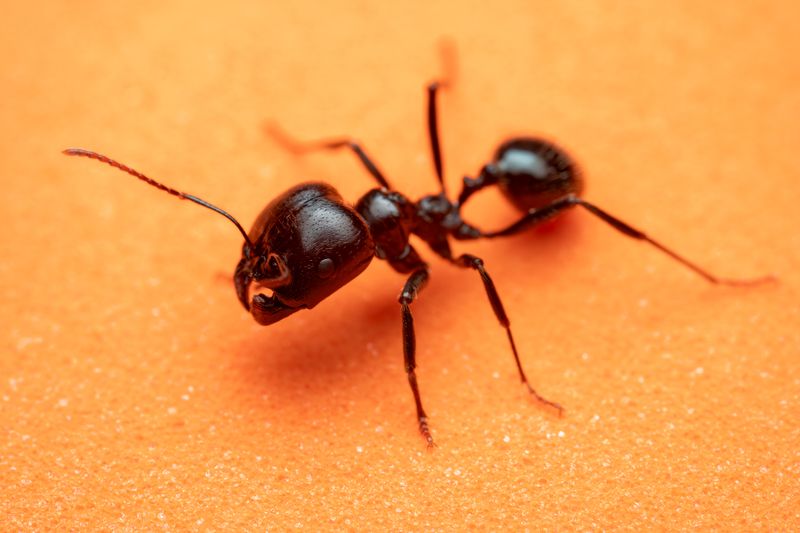
The best ant bait is the slow-acting, label-listed formulation that the identified species is actively feeding on. Place it where the label permits, monitor consumption, keep it fresh, and do not spray insecticide around it. Escalate when ants threaten structural wood, create a sting hazard, keep returning after a documented bait trial, or occupy a site the label does not cover.
Argentine ants usually call for sweet liquid bait and outdoor colony management. Carpenter ants require nest-finding and moisture correction as well as a bait decision. Imported fire ants require an outdoor bait labeled for mound or broadcast treatment. A product that fits one of these jobs can be the wrong choice for another.
This is a desk-researched selection guide, not a hands-on test or performance ranking. It compares pest biology, current manufacturer information, and EPA labels checked on August 25, 2026. Prices are omitted because they change quickly.
Ant Bait Decision Table
| Ant or species clue | Formulation or approach to consider | Placement and monitoring rule | When to assess | Professional trigger |
|---|---|---|---|---|
| Argentine ant: uniform small brown workers in long trails; outdoor colonies may be interconnected | Sweet liquid bait; for severe infestations, UC IPM favors registered low-concentration borate liquid in refillable stations | Start outdoors near trails, nests, and foundations; protect stations from children and pets; refresh as consumed or dried | Check feeding daily at first; look for a decline after 5–10 days, but allow several weeks for a large network | Activity spans several properties, persists after refreshed outdoor baiting, or reaches a sensitive site |
| Odorous house ant: small dark workers that smell strong when crushed | Sweet liquid bait first; offer a small labeled alternative if ignored | Place near active trails or entry points as the label directs; remove competing crumbs and spills | Recheck feeding within 24 hours and trend activity over 5–10 days | Recurring trails, inaccessible indoor nesting, or spread through a multiunit building |
| Pavement ant: dark workers emerging at slab edges, cracks, or foundations | Sweet liquid or another label-listed formulation the trail accepts | Place beside, not across, travel routes; keep bait fresh and away from spray residue | Recheck within 24 hours; reassess position or formulation if ignored | Repeated indoor activity despite exclusion and monitored bait |
| Carpenter ant: large workers, coarse wood debris, moisture-damaged wood, or indoor swarmers | Locate the nest and correct moisture; a label-listed granular, liquid, or gel bait may support the plan | Treat only active, label-permitted sites; monitor feeding within 24 hours and replace ignored bait | Expect weeks rather than days; do not let baiting delay a structural inspection | Indoor nest signs, damaged wood, multiple nests, inaccessible voids, or persistent activity |
| Imported fire ant: variable-size reddish workers from a soil mound that sting aggressively | Fresh oil-based granular fire-ant bait labeled for individual mounds or broadcast use | Apply only to listed outdoor sites when ants are foraging, ground is dry, and rain is not expected; follow the exact rate | An individual hydramethylnon treatment may show mound control in about a week; broadcast programs take longer | High-traffic area, severe sting risk, water-adjacent site, large acreage, or uncertain identification |
Not sure which row fits? Start with the pest identification flowchart and the broader indoor ant identification and control guide.
Best Starting Point for Argentine Ants
Argentine ants favor sweet bait throughout the year, although food preference and feeding intensity can change. The UC Statewide IPM Program recommends liquid bait with 0.5% to 1% borate in sugar water, held in refillable stations, for severe Argentine-ant infestations. Lower concentration and adequate volume give foragers time to move more bait through the colony.
Prefilled 5.4% borax stations serve a different, smaller-scale role. TERRO T300 Liquid Ant Baits contain 5.4% sodium tetraborate decahydrate. The current EPA label for registration 149-8 lists Argentine, odorous house, and pavement ants, among other sweet-eating household ants, but explicitly excludes fire, pharaoh, carpenter, and harvester ants.
For T300, place stations label-side up near active trails or entry points, monitor without disturbing the ants, and replace depleted bait as the package directs. The EPA label says complete control may take up to two weeks. Do not interpret that as a guarantee for a large outdoor Argentine-ant network; UC IPM notes that those infestations can require lower-concentration bait, more capacity, repeated servicing, and exclusion.
Reduce alternative food and water, seal entry gaps, fix leaks, and manage honeydew-producing insects on nearby plants. Outdoor baiting generally avoids drawing more foragers into the house. Keep every station in a protected, label-permitted position inaccessible to children and pets.
Best Approach for Odorous House and Pavement Ants
Both species often accept sweet liquid bait, so a current label-listed station such as TERRO T300 can be a reasonable first trial. That is a formulation match, not a universal product win. Place bait where workers are already traveling and record whether they feed.
If the trail ignores fresh bait, do not keep adding more of the same product. UC IPM advises repositioning the station or trying another labeled bait because ant preferences vary with species, season, and competing food. Clean spills and crumbs, but do not clean, spray, or apply strong-smelling products directly around an active bait placement.
Best Approach for Carpenter Ants
Carpenter ants make nesting galleries in wood; they do not eat the wood. Bait can help only when workers accept it and carry enough back to the nest. The University of Minnesota Extension says placement and monitoring are critical: check feeding within 24 hours, replace ignored bait, and expect control to take weeks or months.
Advance Granular Carpenter Ant Bait is a granular product, not a gel. BASF lists it for indoor and outdoor use. Its current EPA label, registration 499-370, identifies 0.011% abamectin B1 and lists carpenter ants. The label directs users to follow activity to permitted crevices or voids and keep the bait dry; food-area and application restrictions also apply.
Do not let a product purchase substitute for inspection. Trace nighttime activity, look for coarse debris and moisture-damaged wood, repair leaks, and replace decayed material. Indoor swarmers, repeated sightings, or suspected structural nesting justify a professional inspection because hidden or multiple nests are difficult to locate and treat.
Best Approach for Imported Fire Ants
Choose an outdoor granular bait, not a similarly shaped contact granule. The University of Georgia Extension recommends fresh bait when workers are actively foraging, with dry ground and no expected rain. A small test amount can show whether ants are collecting it before a full label-directed application.
AMDRO Fire Ant Bait is one label-checked example. The current EPA label, registration 73342-1, identifies 0.73% hydramethylnon and permits individual-mound and broadcast applications on listed non-cropland outdoor sites. It says not to water the bait in, not to apply to impervious surfaces, and to avoid application when rain is likely within 24 hours. Use only the rate, equipment, interval, and site on the container label in your possession.
Keep people and pets out of the area during application and prevent granules from reaching drains or surface water. Bring in a licensed professional when mound locations, acreage, public exposure, or sting risk make careful application impractical.
Why Spraying Around Bait Backfires
Slow action lets a forager return to the nest and share bait. A contact spray kills exposed workers but may leave the colony untouched; spray residue can also stop ants from feeding at the bait. Never combine products merely because each label lists ants.
The EPA recommends prevention first, keeping baits away from children and pets, and applying non-bait pesticides only to targeted, label-approved locations. Track food, water, entry points, and bait response in the IPM home inspection log so the next decision is based on evidence.
A Safe Buying Checklist
Before buying any ant killer or bait:
- Confirm the species or preserve a specimen. “Small black ant” is not enough for a reliable product match.
- Read the current container label. Confirm the pest, indoor or outdoor site, formulation, placement, restrictions, storage, and disposal.
- Check the EPA registration number. The EPA explains how to use its Pesticide Product Label System, but the label attached to your product remains controlling.
- Plan monitoring before treatment. Record placement, feeding, refill or replacement, weather, and the date you will reassess.
- Plan exposure control. Review pest control around dogs and cats and keep all products secured as directed.
- Set a professional threshold. Compare DIY and professional pest control before a low-risk trail becomes a structural, sting, or repeated-treatment problem.
Bottom Line
For Argentine, odorous house, and pavement ants, begin with a sweet liquid bait only when its current label lists the species and site; severe Argentine-ant networks may require lower-concentration refillable outdoor stations. For carpenter ants, prioritize nest location and moisture correction, using a labeled bait only as part of that plan. For imported fire ants, use fresh outdoor granular bait under dry, active-foraging conditions and follow every label restriction.
Identify, place, monitor, and adjust. That sequence is more defensible than any universal “best ant killer” ranking—and it gives you a clear point at which to stop experimenting and call a professional.

Kevin Larrabee
Independent trade-focused editorial team