Squirrel removal cost: What changes your quote
Quick answer
Squirrel removal cost depends on where the animals are, whether young are present, access and safety, the removal method, the number of entry points, repairs, cleanup, return visits, and warranty scope. Compare local written quotes line by line rather than relying on one national average.
Common questions
- How much does it cost to get rid of squirrels?
- Current national consumer guides show several-hundred-dollar starting points, but attic removal, whole-home exclusion, repairs, cleanup, monitoring, and warranties can change the total substantially. Get an itemized local quote.
- Does squirrel removal include sealing entry points?
- Not always. Removal or eviction, secondary-opening repairs, final closure of the active entry, cleanup, and warranty coverage should each be stated in writing.
- Can I seal the hole while squirrels are in the attic?
- No. Sealing an active opening can trap an adult or dependent young inside. Confirm species and life stage, then use a lawful removal and exclusion sequence before final closure.
Source note: Reviewed September 2026 against current Washington and New York wildlife-agency guidance, Alabama Cooperative Extension attic guidance, and dated 2026 consumer cost sources. State and local wildlife rules and written local quotes control.
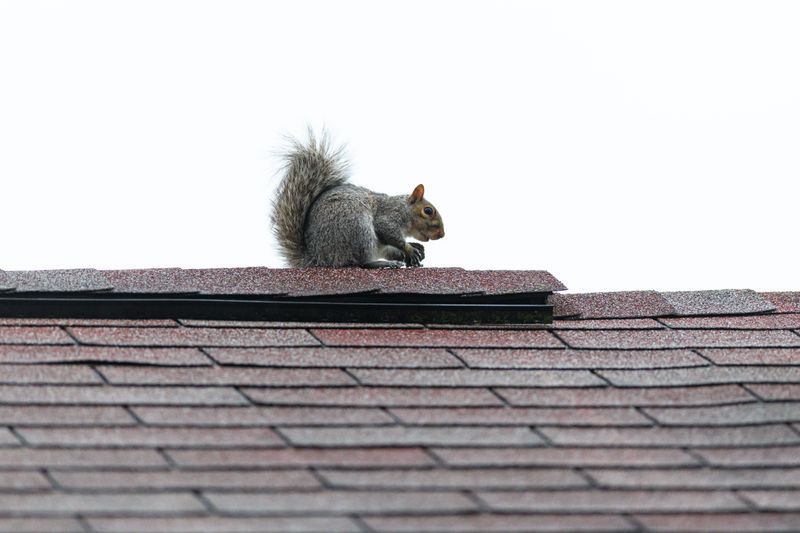
Squirrel removal cost is usually a scope question before it is a price question. As of September 2026, Angi lists a $300 national average and an attic range of $280–$920, while HomeGuide lists $300–$600 for removal and $500–$1,500 for attic work. Those figures use different assumptions, so they are directional market references—not promises for your house.
A local written quote should separate inspection, removal, exclusion, building repairs, sanitation, monitoring, and warranty. The lowest total may cover only trapping; a higher total may include roofline repairs and return visits. Compare the work before comparing the price.
Why Squirrel Removal Estimates Vary
The largest cost drivers are:
- Location and access: An open garage is easier to inspect than a steep roof, tight attic, chimney, ceiling void, or wall cavity.
- Species and life stage: Tree squirrels and flying squirrels can use different openings. A nursing female or dependent young changes the safe timing and method.
- Number of active animals: One accidental visitor is different from an established nest requiring repeated checks.
- Entry-point inventory: One repairable fascia gap costs less to address than multiple failed soffits, vents, roof returns, or connected-unit routes.
- Removal method: One-way exclusion, cage trapping, on-site release where lawful, and other methods have different labor, monitoring, and legal requirements.
- Damage: Gnawed wiring, wet or compressed insulation, roof leaks, damaged vents, and chewed wood may require electricians, roofers, or other qualified trades.
- Contamination: Nesting material, urine, droppings, carcasses, parasites, and affected insulation can add assessment, containment, removal, and disposal work.
- Follow-up: Return visits, device checks, final closure, post-work inspection, and warranty terms may be included, limited, or billed separately.
If you are still confirming what is in the attic, start with our squirrel attic identification and exclusion guide. Daytime movement can support a squirrel diagnosis, but sound alone is not enough to approve a squirrel-specific job.
Squirrel Removal Cost Ranges in Context
The current national guides demonstrate why a single headline number can mislead:
- Angi’s 2026 squirrel removal guide, updated March 18, reports a $300 national average, $280–$920 for attic work, and $100–$150 for an inspection.
- HomeGuide’s February 2026 guide reports $300–$600 for removal, $500–$1,500 for attic projects, and $125–$250 for an inspection. It describes some attic pricing as including trapping, cleanup, minor repairs, exclusion, and a guarantee.
These are U.S. consumer-market estimates, not contractor bids or regulated rates. Geography, labor, building design, species, season, included repairs, and service definitions all matter. Ask each provider to state whether the inspection fee is credited to approved work and whether the quoted total is fixed, allowance-based, per animal, or per visit.
Use This Squirrel Removal Quote Worksheet
Copy this table into a note or spreadsheet. Mark each cell included, optional, excluded, or unknown for every proposal.
| Scope | What the written quote should say | Cost-changing questions |
|---|---|---|
| Inspection | Areas inspected, species evidence, active openings, nest or young check, photos, and inaccessible zones | Are the full roofline, attic, soffits, vents, chimney, and connected spaces included? |
| Removal | Proposed method, target species, handling of young, visit count, device checks, and completion standard | Is pricing per setup, visit, animal, or completed job? What happens if another species is found? |
| Exclusion | Secondary openings to close, active-entry sequence, one-way device if appropriate, materials, and final closure | Which openings are included? When is the active entry permanently sealed? |
| Repairs | Fascia, soffit, vent, flashing, roof, siding, insulation, drywall, and wiring responsibilities | Is this pest-proofing, a temporary patch, or a permanent trade repair? Who handles hidden damage? |
| Sanitation | Nest and droppings removal, affected insulation, containment, cleaning method, disposal, and excluded areas | Is cleanup localized or whole-attic? What evidence supports the proposed square footage? |
| Monitoring | Return schedule, device removal, activity checks, photos, and sign-off criteria | How many visits are included, and what proves that all animals are out? |
| Warranty | Covered openings, term, response time, transfer or renewal rules, exclusions, and remedy | Does coverage include retrapping, resealing, both, or neither? Are new openings excluded? |
A proposal that says only “squirrel treatment” is not ready to compare. Ask for opening locations, materials, sequence, follow-up, and exclusions in writing.
What Raises the Cost of Squirrels in an Attic?
Attic work adds access and safety constraints. The Washington Department of Fish and Wildlife recommends professional help when attics are involved because access and movement can be dangerous. Do not step between joists, disturb unknown wiring, or enter an area with unsafe heat, poor visibility, structural damage, or extensive contamination.
Electrical damage also changes the handoff. Alabama Cooperative Extension identifies wiring, pipes, rafters, soffits, fascia, siding, and ridge vents among the items squirrels may gnaw or damage. If wiring is chewed, avoid touching it and have a qualified electrician assess it; wildlife removal does not make an electrical repair safe.
Similarly, removal is not the same as whole-house exclusion. Our rodent exclusion cost guide explains mouse- and rat-focused building-envelope work, while the whole-house pest-proofing guide helps document other openings. Keep those scopes separate from the squirrel-specific active-entry and young-animal plan.
Timing and Wildlife Rules Affect the Method
Never seal an animal or dependent young inside. Alabama Extension notes eastern gray squirrels commonly breed in February/March and July/August and that young may remain in the nest for 10–12 weeks. Calendar dates are only a warning flag; the provider still needs to look and listen for young before trapping or exclusion.
Wildlife law varies by state, species, method, and destination. For example, current Washington trapping guidance says transporting live wildlife generally requires a permit and warns never to trap an adult caring for dependent offspring. New York DEC says a captured animal cannot be relocated off the property by a homeowner and directs removal work to a nuisance wildlife control operator.
Do not assume a “trap and relocate” line item is lawful locally. Ask the provider to identify the animal, explain the disposition, and show any wildlife-control certification or license required in your jurisdiction. If inspection suggests bats, stop and use the bat-specific timing and exposure boundaries in our bat removal and exclusion cost guide.
DIY Tasks vs. Professional Handoff
Homeowners can safely contribute useful information without climbing onto a roof or handling wildlife:
- Record when and where sounds occur.
- Photograph exterior damage from the ground with zoom.
- Note visible entry and exit activity without blocking the opening.
- Test smoke and carbon monoxide alarms.
- Collect previous roof, siding, electrical, or wildlife invoices.
- Ask the state wildlife agency which rules and provider credentials apply.
Use an appropriately qualified wildlife-control provider when the species is uncertain, young may be present, the attic or roof is unsafe, an animal is in a wall or chimney, electrical damage is suspected, contamination is extensive, or local law restricts the work. Roof, electrical, structural, and large-scale remediation repairs may also require separate trades.
Questions to Ask Before Signing
- What evidence confirms squirrels rather than mice, rats, bats, birds, or raccoons?
- Did you check for a nest and dependent young?
- Which active and secondary openings are shown in the photos?
- What removal and final-sealing sequence will avoid trapping animals inside?
- Which visits, devices, repairs, cleanup, and disposal are included?
- What work is assigned to a roofer, electrician, carpenter, or remediation contractor?
- What wildlife rules and credentials apply here?
- How will completion be verified after the last device is removed?
- What exactly does the warranty cover, and what voids it?
- Can change orders occur, and what written approval is required first?
Red flags include pressure to close an active hole immediately, no species identification, no young-animal check, vague sanitation upsells, a refusal to itemize repairs, guaranteed results without written terms, or a relocation plan that ignores state law.
Your Quote-Ready Next Step
Create one inspection record before calling providers: dates and times of activity, rooms or roof areas involved, ground-level photos, suspected openings, visible damage, access constraints, prior repairs, and questions about young or other species. Then ask two or three appropriately credentialed providers to complete the same worksheet.
Compare the defined scope, not just the total. The best squirrel removal quote explains how animals will leave lawfully, how dependent young will be protected, which openings and damage will be repaired, how activity will be monitored, and what happens if squirrels return.
Image: Jay Brand via Pexels.

Kevin Larrabee
Independent trade-focused editorial team