Cockroach exterminator cost: Compare treatment quotes
Quick answer
Cockroach exterminator cost depends on the species and activity found, how many rooms or units are involved, access and preparation, treatment methods, repeat visits, monitoring, and warranty terms. Compare local written quotes by scope rather than choosing from one headline price.
Common questions
- How much does a cockroach exterminator cost?
- Published Australian provider examples reviewed in September 2026 range from about A$140 for a general pest visit that includes cockroaches to A$1,200 for a multi-visit German cockroach program. These are differently scoped examples, not a national average; your local written quote controls.
- Why does German cockroach treatment cost more?
- A confirmed indoor population can require more inspection, targeted treatment, monitoring, repeat visits, and coordination across connected rooms or units than an occasional large outdoor cockroach entering one home. The inspection evidence and written scope should justify the difference.
- What should a cockroach treatment quote include?
- Ask for the species and activity evidence, areas and units included, preparation, treatment methods, product and label information, visit schedule, monitoring plan, completion standard, warranty remedy, exclusions, GST, and possible change charges.
Source note: Reviewed September 2026 against dated Australian provider price pages, EPA and Penn State IPM guidance, an APVMA-approved cockroach gel label, and Victorian pest-control licensing guidance. Local written quotes, current product labels, and applicable licensing rules control.
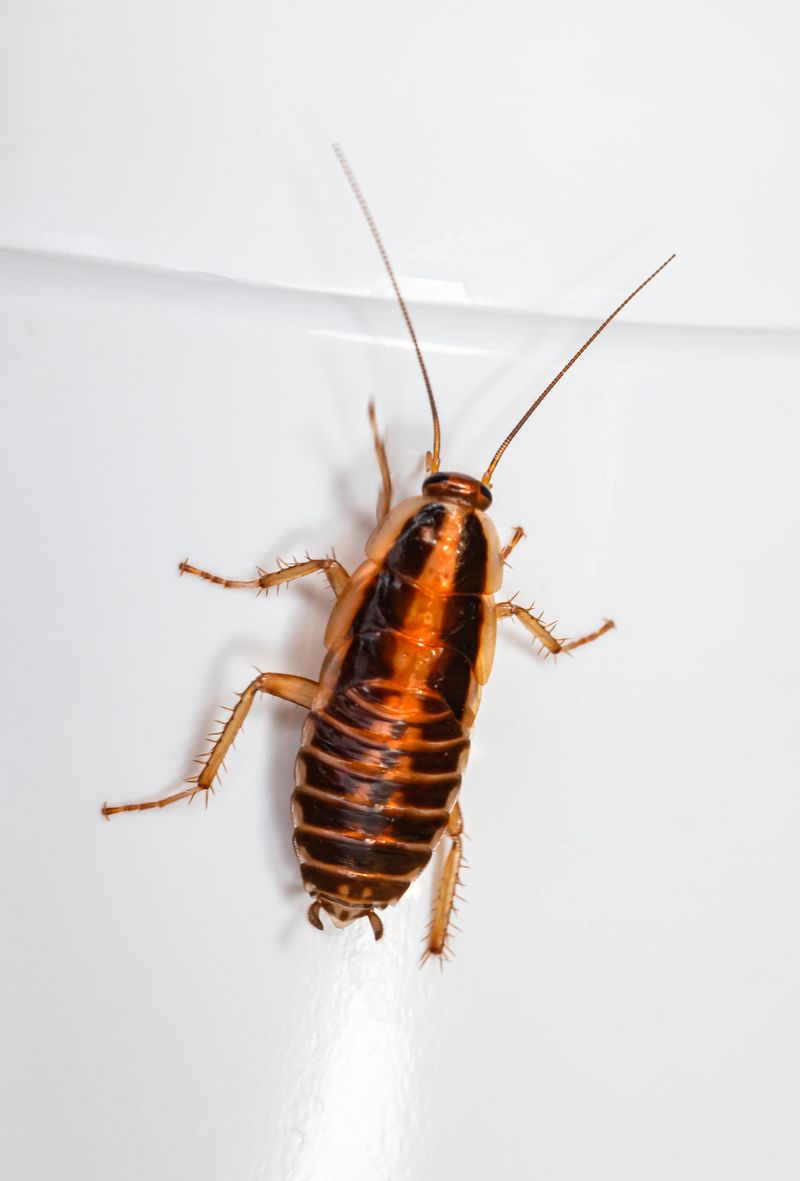
Cockroach exterminator cost is determined by the job being quoted, not by one universal rate. Published Australian examples reviewed on September 9, 2026 run from about A$140 for a general pest visit that includes cockroaches to A$1,200 for a multi-visit German cockroach program. Those services are not equivalent.
A useful written quote explains the evidence, areas included, preparation, treatment method, repeat visits, monitoring, and warranty. Compare those details before comparing totals.
Current Cockroach Treatment Price Examples
These provider-published prices are dated market examples, not national averages or endorsements:
- Bob Pest Control’s 2026 Sydney price page lists a general internal-and-external treatment for a one- or two-bedroom unit from A$140 including GST. Cockroaches are included with ants, spiders, and silverfish, so this is not a cockroach-only eradication program.
- Iconic Pest Solutions’ May 2026 Sydney guide lists A$150–A$250 for a standard apartment treatment and A$400–A$1,200 for a multi-visit German cockroach program. Its stated inclusions differ by tier.
- Bug Free Pest Control’s 2026 Sydney guide lists A$150–A$300 for German cockroach treatment.
Location, property type, evidence, and service definition all affect the comparison. Ask whether GST, call-out fees, parking, after-hours access, and retreatment are included.
For multi-pest budgeting rather than a cockroach-specific proposal, use the general pest control cost guide.
Eight Factors That Change a Cockroach Exterminator Quote
1. Species and Activity Evidence
A quote should identify the likely species and supporting evidence, such as a specimen, sticky-monitor catch, droppings, egg cases, or shed skins. An indoor-breeding German cockroach population calls for a different scope than an occasional large cockroach entering from outdoors.
If identification is uncertain, review the German cockroach signs guide and ask the provider what evidence would change the plan. A sight-unseen quote can be a starting estimate, but it should state what happens if the inspection finds another species or a wider distribution.
2. Infestation Distribution
One active kitchen cabinet is not the same job as activity in kitchens, bathrooms, bedrooms, utility rooms, or commercial food areas. Ask the provider to map inspected and affected zones rather than describing the problem only as light, moderate, or severe.
3. Property and Unit Count
Floor area matters, but the number of connected spaces and access points may matter more. A quote for one apartment cannot promise building-wide control if adjacent units or shared routes remain outside the scope.
4. Sanitation and Moisture Conditions
Leaks, condensation, grease, food residue, open trash, cardboard, and inaccessible clutter can support activity or limit treatment access. The proposal should separate resident cleaning, maintenance repairs, and technician work without using sanitation as a substitute for inspecting connected routes.
5. Preparation
Ask what must be emptied, cleaned, moved, covered, or left in place and what happens if an area is inaccessible. For rental or strata property, identify who coordinates notices, keys, pets, vulnerable occupants, and adjacent-unit access.
6. Treatment Method
“Cockroach treatment” is too vague. The quote should name the proposed approach and where each part is intended to be used. It should also distinguish an inspection-led, targeted service from a routine surface application.
Our step-by-step cockroach IPM guide covers the control sequence; this page focuses on the professional scope and price decision.
7. Repeat Visits and Monitoring
Clarify whether the price covers one appointment, a defined number of returns, or visits until a stated completion criterion is met. Monitoring should establish a baseline and show whether activity is declining; a calendar warranty alone does not prove the source is controlled.
8. Warranty and Exclusions
A written warranty should state its term, covered pest and areas, response time, remedy, occupant duties, and exclusions. Ask whether return visits are chargeable and whether activity from untreated units or unresolved defects is excluded.
Cockroach Quote Comparison Worksheet
Send the same questions to each provider, then mark every line included, optional, excluded, or unknown.
| Scope item | What the quote should document | Cost question to ask |
|---|---|---|
| Inspection | Species evidence, activity map, inspected rooms, inaccessible areas, and contributing conditions | Is inspection included or credited if work proceeds? |
| Property coverage | Interior, exterior, roof or subfloor areas, shared spaces, and exact unit count | Is price per unit, visit, zone, or completed program? |
| Preparation | Cleaning, clearing, food protection, pet plans, notice, and access requirements | Are missed-access returns chargeable? |
| Treatment | Methods, target sites, product names, label or registration details, and occupant precautions | Which items are included now and which require approval? |
| Building corrections | Leak, gap, cabinet, drain, trash, or utility-route findings and responsible party | Are repairs included, referred, or excluded? |
| Follow-up | Number and timing of visits, inspection tasks, and change criteria | What triggers an added visit or change order? |
| Monitoring | Device locations, baseline, recheck counts, and completion standard | Are monitors, collection, and written results included? |
| Warranty | Term, covered areas, remedy, response time, duties, and exclusions | Is retreatment included, and what voids coverage? |
| Total | GST, call-out, parking, access, disposal, after-hours work, and payment schedule | What is the maximum total without written approval? |
One-Off Pesticide Application vs. an IPM Program
Integrated pest management (IPM) is a decision process, not a premium name for spraying. The U.S. EPA’s housing guidance describes monitoring, removing food and water sources, exclusion, maintenance, resident cooperation, and targeted control as connected parts of multifamily pest management. Penn State Extension’s cockroach IPM guidance likewise prioritizes prevention, sanitation, exclusion, monitoring, and nonchemical tools before pesticide decisions.
| One-off application | Defined IPM service |
|---|---|
| May begin with a brief visual check | Documents species evidence, distribution, and contributing conditions |
| Applies a stated product during one appointment | Selects targeted methods after inspection and according to current labels |
| May end when application is complete | Records baseline activity and schedules evidence-based follow-up |
| Often leaves leaks, gaps, and shared routes to others | Assigns sanitation, moisture, repair, and access actions to named parties |
| May offer only a time-based retreatment promise | Defines what success, escalation, and warranty response mean |
An IPM quote does not have to include every repair or guarantee zero future sightings. It should identify the dependencies and make the treatment, monitoring, and handoffs explicit. For the broader framework, see integrated pest management for homeowners.
Apartment and Strata Quotes Need an Access Plan
In a multi-unit building, ask whether the provider will inspect or treat only the reporting apartment, adjacent units, vertical plumbing stacks, common kitchens, trash rooms, or other evidence-linked areas. Also ask who authorizes access and what happens when a connected unit cannot be entered.
The EPA notes that effective multifamily IPM involves residents, maintenance staff, managers, and pest professionals. That makes coordination part of the scope, not an administrative afterthought. Tenancy, strata, and local laws determine who must arrange or pay for work, so document the evidence and seek jurisdiction-specific advice rather than assuming responsibility from a general article.
Check the License and Product Label
Verify the credential required where the work occurs. In Victoria, the Department of Health says fee-charging pest control operators who apply pesticides must be licensed and provides a searchable pest control licence register. Other Australian states and countries use their own regulators and categories.
Ask the provider for the proposed product name, registration or approval number, target pest and site, safety instructions, and records supplied after application. The current label on the product used controls; do not accept a generic placement or re-entry promise copied from another product.
For example, the Australian APVMA-approved Vedira Gel Cockroach Bait label is specifically for German cockroaches in listed buildings. It prohibits application to food-contact surfaces and areas easily accessible to children or animals, and it calls for a visual inspection of placements one month after initial treatment. That example shows why the exact product and follow-up plan belong in the quote; it is not a universal direction for other baits.
Households with animals should also use the pet-safe pest control planning guide for product-specific exposure questions.
Red flags include no species evidence, a promise based only on spraying visible cockroaches, no written occupant-safety instructions, no explanation of repeat visits, an unverifiable credential, or a warranty whose remedy is not stated.
Your Quote-Ready Next Step
Before requesting estimates, make a one-page record with sighting dates, rooms, photos or a captured specimen, sticky-monitor locations and counts, leaks, neighboring-unit reports, pets or sensitive occupants, access limits, and previous treatments. Send the same record and worksheet to two or three appropriately licensed providers.
Choose the clearest evidence-based scope, not automatically the lowest total. A strong cockroach exterminator quote connects the price to identification, distribution, access, targeted treatment, monitoring, repeat visits, and a written warranty response.
Image: Erik Karits via Pexels.

Kevin Larrabee
Independent trade-focused editorial team