How to Get Rid of Cockroaches: A Step-by-Step IPM Plan
Quick answer
To get rid of cockroaches, identify the species, map activity with sticky monitors, remove food and water, use a labeled bait if appropriate, seal hiding and entry points, compare follow-up counts, and escalate when activity persists or involves multiple units.
Common questions
- What is the fastest safe way to start cockroach control?
- Start by identifying the cockroach, placing sticky monitors to map activity, removing food and water, and sealing gaps. If a pesticide is warranted, choose one labeled for the species and site and follow its current directions exactly.
- Should I spray when using cockroach bait?
- Do not spray over or near bait unless both product labels specifically permit it. Repellent sprays can make some bait unattractive, while sprays and foggers can increase exposure and may trigger asthma attacks.
- When should I call a professional for cockroaches?
- Call a licensed professional when activity is widespread, keeps recurring, involves more than one apartment, reaches sensitive areas, or does not decline after the IPM plan and label-directed follow-up.
Source note: Updated September 2026 using UC IPM cockroach guidance, CDC and EPA asthma guidance, and EPA-accepted pesticide labeling. The label on the product in hand controls every use, placement, rate, precaution, and reapplication decision.
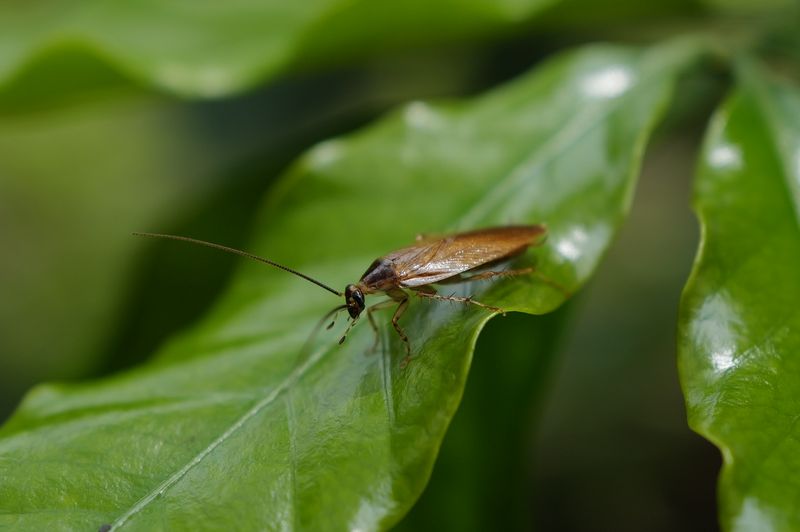
The best way to get rid of cockroaches is an ordered integrated pest management (IPM) plan: identify the species, map where it is active, remove food and water, use a labeled bait if appropriate, seal hiding and entry points, monitor the results, and escalate when the evidence says the plan is not working. Do not start by fogging or spraying the room.
A baseline and follow-up count show whether the hidden source has changed; killing the few cockroaches you see does not.
Step 1: Identify the Cockroach Before Treating
Species affects where you inspect and whether the source is indoors, outdoors, or elsewhere in the building. Capture a specimen or take a clear photo; use the pest ID flowchart if you are unsure.
| Likely cockroach | Useful clues | Where to inspect first | First action |
|---|---|---|---|
| German | Small, tan, with two dark stripes behind the head | Warm kitchen and bathroom cracks, cabinets, and appliances | Start indoor monitoring and a coordinated IPM response; read the German cockroach guide |
| American | Large, reddish brown, with a pale border behind the head | Basements, utility areas, drains, sewer connections, and exterior entry points | Look for moisture, drain, or structural access and involve maintenance when plumbing is implicated |
| Oriental | Dark brown to black and glossy | Cool, damp basements, crawlspaces, floor drains, and utility penetrations | Correct moisture and inspect low-level entry points |
| Smokybrown | Uniform dark mahogany brown | Attics, eaves, vegetation, rooflines, and exterior gaps | Reduce exterior harborage and seal routes indoors |
An extension office or licensed professional can confirm an uncertain identification.
Step 2: Map Activity Room by Room
Use a flashlight and numbered sticky monitors near suspected hiding areas. Follow the label and keep monitors away from children and pets.
| Area | Inspect | Record |
|---|---|---|
| Kitchen | Refrigerator, stove, cabinet corners, sink and pipe gaps, and dishwasher area | Insects, droppings, cast skins, egg cases, moisture, food residue, and monitor count |
| Bathroom and laundry | Vanity, toilet and pipe gaps, water heater, drains, and damp storage | Leaks, condensation, sightings, and monitor count |
| Basement or crawlspace | Floor drains, foundation gaps, utility lines, cardboard, and damp areas | Entry, moisture, species clues, and monitor count |
| Bedrooms and living areas | Shared walls, electronics, stored boxes, and baseboards | Whether activity has spread beyond food and water areas |
| Exterior and shared spaces | Door thresholds, trash area, pipe chases, meter boxes, landscaping, and neighboring-unit boundaries | Outdoor pressure, building defects, and who controls the repair |
Number each monitor and use the same locations for comparison. UC IPM recommends checking frequently at first to find the highest-activity areas, then keeping before-and-after records to evaluate control.
Step 3: Remove Food, Water, and Hiding Places
Cleaning removes resources cockroaches use, but even a clean unit can be reinfested through plumbing chases, deliveries, shared walls, or a neighboring unit.
- Store pantry items and pet food in tightly sealed containers.
- Clean crumbs, grease, spills, and dishes promptly; keep trash in a closed container.
- Repair leaks and dry condensation or standing water.
- Vacuum cracks and crevices to remove debris, shed skins, and egg cases. A HEPA-filtered vacuum can help limit airborne allergen debris.
- Remove cardboard and paper clutter near kitchens and bathrooms.
- Inspect used appliances, furniture, and boxes before bringing them inside.
See integrated pest management for homeowners for the whole-home framework.
Step 4: Use Bait Only as the Label Directs
UC IPM identifies insecticidal baits as a primary pesticide option. The product label—not a blog or another product’s directions—decides whether, where, how much, and how often you may apply it.
Before using any bait:
- Confirm that the label lists the cockroach species and the intended indoor or outdoor site.
- Read the entire label, including child, pet, food-contact, storage, and disposal restrictions.
- Place or apply bait only in label-approved locations near documented activity.
- Do not apply it on food-preparation surfaces or where children or pets can reach it.
- Inspect placements and refresh, move, or discontinue them only as that label allows.
For example, an EPA-accepted indoxacarb gel label dated October 28, 2025 prohibits food-preparation surfaces and child- or pet-accessible areas. It also says not to spray over the gel because the bait may become repellent. That is why universal dot sizes, rankings, rotation schedules, and reapplication calendars are inappropriate.
Avoid foggers, bug bombs, and broad indoor spraying. UC IPM warns they can be hazardous and disperse cockroaches without reaching their hiding places. The CDC’s asthma guidance says sprays and foggers can cause asthma attacks. Sensitive households should involve a healthcare professional and licensed pest professional.
Dusts are pesticides too; “natural” or “food grade” does not mean risk-free or pet-safe. Use one only when its label permits the pest, site, method, and placement. Review the pet-safe pest control guide.
Step 5: Seal Entry Points and Harborages
After active areas are mapped and cleaned, close the routes that support reinfestation:
- Seal gaps around plumbing and utility penetrations with an appropriate material.
- Repair door sweeps and weatherstripping.
- Seal cabinet, baseboard, and wall cracks after confirming they are not concealing an unresolved building problem.
- Correct roof, drain, sewer, or foundation defects with the appropriate trade professional.
- Reduce dense vegetation, debris, and damp hiding places beside the structure when outdoor species are involved.
In an apartment, notify management in writing before altering shared building components. Sealing one unit without inspecting connected areas can simply shift activity.
Step 6: Compare Baseline and Follow-Up Counts
Do not promise elimination by a set date. Check the same monitors on a consistent schedule and compare like with like.
| Monitor | Location | Baseline count | Follow-up count | Conditions or action changed |
|---|---|---|---|---|
| 1 | Behind refrigerator | |||
| 2 | Under kitchen sink | |||
| 3 | Bathroom vanity | |||
| 4 | Entry or utility area |
The printable IPM home inspection and monitoring log gives you room for sightings, entry points, service notes, and follow-up actions.
What Changed—and What Did Not?
| Monitoring result | What it may mean | Next decision |
|---|---|---|
| Counts decline in the same locations | The combined plan may be reducing activity | Continue sanitation, exclusion, and label-directed monitoring; do not add preventive pesticide on a calendar |
| Counts are flat or rising | A food, water, harborage, placement, or building source may remain | Reinspect, verify every product matches its label, and consider professional help |
| Counts fall in one room but rise in another | Activity may have shifted or a second source exists | Expand inspection and coordinate adjoining rooms or units |
| No catches, but fresh signs continue | Monitors may be poorly placed or the pest may be misidentified | Move monitors based on evidence, seek identification help, and avoid guessing with pesticides |
| Activity returns after an apparent decline | Reintroduction or an unresolved structural source is possible | Review deliveries, shared walls, drains, exterior entry, and neighboring-unit coordination |
Apartment Cockroach Control: Who Does What?
Multi-unit control requires shared records and coordinated work.
| Role | Responsibility |
|---|---|
| Resident | Report sightings promptly; provide access; store food; reduce clutter; follow preparation and product instructions; keep monitor records |
| Property manager | Coordinate inspection of connected units and common areas; communicate schedules; document complaints and follow-up; engage licensed providers |
| Maintenance | Repair leaks, gaps, door sweeps, drains, damaged cabinets, and utility penetrations within its scope |
| Pest professional | Confirm species and extent; choose label-compliant methods; document products and placements; set monitoring and escalation criteria |
Leases and housing rules determine legal responsibility; coordinated control remains the practical goal.
When to Call a Licensed Pest Professional
Escalate for multiple rooms or units, uncertain identification, flat monitor counts, recurring activity, structural access, sensitive occupants, childcare, healthcare, or food service. Also call when a label is unclear or the site is inaccessible.
Use the DIY vs. professional pest control guide to compare risk and complexity. If you are collecting estimates, use the cockroach exterminator cost worksheet to compare identification, treatment, monitoring, follow-up, and warranty scope. Ask how the provider will document counts, coordinate repairs, and choose label-compliant products.
Start With One Concrete Next Step
Photograph or capture the cockroach, number your monitors, and record a baseline before buying another product. The evidence shows when the plan should change.
Primary sources: UC IPM cockroach management, CDC asthma control guidance, EPA guidance on cockroaches and asthma, and the EPA-accepted gel bait label example.

Kevin Larrabee
Independent trade-focused editorial team