How to Get Rid of Stink Bugs Inside and Outside Your Home
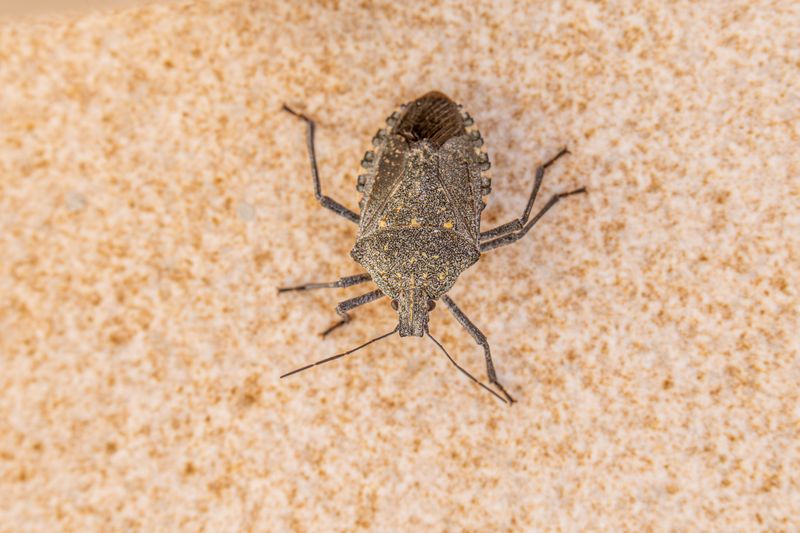
Brown marmorated stink bugs (BMSBs) have become one of the most frustrating household pests in the United States. Introduced from Asia in the late 1990s, they now infest homes across 47 states — and their numbers grow every year. The problem isn’t just their smell. A single home can host hundreds or even thousands of stink bugs overwintering inside walls and attic spaces, emerging on warm winter days and flooding into living areas.
The good news: stink bugs are controllable. This guide covers how to stop them before they get in, how to eliminate the ones already inside, and which products actually work.
What Are Stink Bugs?
The brown marmorated stink bug (Halyomorpha halys) is a shield-shaped insect about 5/8 inch long. Its mottled brown coloring gives it excellent camouflage on tree bark and dry vegetation. The name comes from the pungent defensive odor released when the bug is disturbed, crushed, or threatened — a chemical compound that’s been described as a mix of cilantro and skunk.
Stink bugs are not dangerous. They don’t bite humans, don’t carry disease, and don’t damage structures. Their impact is on quality of life and on gardens and orchards — they’re serious agricultural pests that feed on fruits, vegetables, and ornamental plants.
The Stink Bug Lifecycle (and Why Timing Matters)
Understanding the stink bug lifecycle is critical to effective control.
- Spring (April–June): Stink bugs that overwintered inside or nearby emerge when temperatures reliably hit 65°F. Females begin laying eggs on the undersides of leaves.
- Summer (July–August): Active feeding on gardens and ornamental plants. Population builds across multiple generations.
- Early fall (September–October): This is the critical window. As temperatures drop, stink bugs aggregate on sun-warmed exterior walls and begin seeking overwintering sites — which often means your home. This is when mass invasions happen.
- Winter: Stink bugs enter diapause (dormancy) inside wall voids, attics, and crawl spaces. They don’t feed during this period.
The most effective time to act is late summer through early fall, before the overwintering migration begins.
Step 1: Seal Entry Points (the Most Important Step)
Stink bugs enter through any gap they can find. A thorough exclusion job is the single highest-impact thing you can do — more than any spray or trap.
Common Entry Points
- Gaps around window and door frames
- Damaged or missing window and door screens
- Gaps around utility penetrations (pipes, wires, cables entering walls)
- Cracks in the foundation and siding
- Gaps under siding at the roofline
- Attic vents with damaged or missing screens
- Gaps around chimneys
- Door sweeps (or lack thereof)
How to Seal Them
- Caulk all visible cracks and gaps around window frames, door frames, and utility penetrations. Use a silicone or latex caulk rated for exterior use.
- Replace damaged screens. Even a small tear gives stink bugs access to the interior.
- Install door sweeps on all exterior doors.
- Cover attic vents with 1/16-inch hardware cloth or fine mesh screen.
- Inspect the soffit and roofline for gaps where the fascia board meets the siding.
This work is tedious but it pays dividends — a properly sealed home will have significantly fewer stink bug problems for years to come.
Step 2: Treat the Perimeter
Perimeter insecticide sprays applied to the exterior of your home in late summer create a chemical barrier that kills stink bugs before they can enter. Timing is everything — apply in late August or early September, before the mass fall migration begins.
Best Perimeter Sprays for Stink Bugs
Ortho Home Defense Insect Killer for Cracks & Crevices
Ortho Home Defense is one of the most widely available perimeter sprays for homeowners. It uses bifenthrin as the active ingredient — a synthetic pyrethroid with a long residual of up to 12 months indoors (shorter outdoors due to UV degradation). Apply around window frames, door frames, foundation edges, and any visible entry points.
Best for: Quick, accessible perimeter protection; first-time DIYers
Active ingredient: Bifenthrin
Price: $ (approx. $10–$15)
Spectracide Bug Stop Home Barrier
Another bifenthrin-based perimeter spray, Spectracide Bug Stop is available in a hose-end spray version that makes covering large areas faster. It provides knockdown on contact and residual control for several weeks outdoors.
Best for: Fast perimeter treatment; larger homes
Price: $ (approx. $8–$12)
Demand CS (Lambda-Cyhalothrin Concentrate)
Professional-grade perimeter control for serious infestations.
Demand CS is a microencapsulated lambda-cyhalothrin concentrate used by pest control professionals. The microencapsulation technology extends residual life significantly — it remains effective outdoors for 30–90 days depending on weather conditions. Mix and apply with a pump sprayer.
Pros:
- Professional-strength active ingredient with long residual
- Microencapsulation reduces breakdown from UV and rain
- Effective against a wide range of insects, not just stink bugs
- Cost-effective when treating large areas
Cons:
- Requires a pump sprayer and measuring
- More care needed near garden beds and water features
Dilution rate: 0.2–0.4 oz per gallon for most applications
Price: $$ (approx. $35–$55 for 8 oz)
Application Tips
- Spray in late afternoon or evening. Avoid applying in direct sun or high heat, which causes rapid evaporation.
- Target the following zones: the entire perimeter of the foundation (12–18 inches up the wall and 12 inches out on the ground), window and door frames, soffits and eaves where accessible, and any visible cracks.
- Reapply after heavy rainfall — most outdoor residuals are reduced by significant rain.
- Do not spray blooming flowers — pyrethroids are toxic to bees and other pollinators when wet.
Step 3: Reduce Attractants
Stink bugs are drawn to warmth, light, and certain plants.
- Turn off or redirect exterior lights at night during peak migration (September–October). Stink bugs are attracted to lit surfaces.
- Use yellow or sodium vapor bulbs outdoors — they attract fewer insects than white or blue-spectrum lights.
- Manage garden plants. Stink bugs feed heavily on tomatoes, peppers, beans, corn, apples, and ornamental plants like butterfly bush. Netting garden beds in late summer keeps bugs off plants and reduces populations near the home.
- Clear wood piles and debris away from the foundation — these create harborage sites that stink bugs use before migrating indoors.
Step 4: Catch and Remove the Ones Already Inside
If stink bugs are already inside your home, spraying insecticides indoors is generally not the right approach — killing large numbers inside walls creates a secondary problem with carpet beetles that feed on dead insects. The better strategy is trapping and removal.
RESCUE! Stink Bug Trap
The RESCUE! Stink Bug Trap is one of the few stink bug-specific traps on the market backed by independent research. It uses a pheromone lure (the aggregation pheromone that stink bugs use to signal safe overwintering sites) to attract bugs into a disposable bag.
Pros:
- Pheromone lure is species-specific — attracts stink bugs, not beneficial insects
- No chemicals required
- Can be used indoors and outdoors
- Easy to dispose of without triggering the defensive odor
Cons:
- Lure loses potency after 8–12 weeks and needs replacement
- Most effective in fall when stink bugs are actively aggregating
- Won’t prevent entry on its own
Best placement: Near windows and doors where stink bugs are entering; on exterior walls near peak entry points.
Price: $$ (approx. $20–$30)
DIY Light Trap
A simple and effective indoor trap: fill a foil roasting pan with soapy water and position it under a desk lamp or LED strip light. Stink bugs are attracted to the light, fall into the soapy water, and can’t escape. Empty and refill daily. This works particularly well when deployed at night in dark rooms.
Vacuum Removal
For individual bugs, a vacuum is the fastest removal method. Use a shop vac, not your household vacuum — the odor from crushed bugs will transfer to the machine’s interior filter. After vacuuming, immediately remove the bag or empty the canister into a sealed bag and dispose outdoors.
A dedicated “stink bug vacuum” (an inexpensive shop vac designated for pest removal) is a worthwhile investment for households with significant annual invasions.
Don’t Crush Them
Crushing stink bugs releases the defensive odor and can trigger other bugs in the area to release their own secretions. Always use traps or a vacuum for removal indoors.
Stink Bug Control Comparison
| Method | Best Use | Effectiveness | Cost |
|---|---|---|---|
| Exclusion (caulk, screens, sweeps) | Prevention | Very high (long-term) | $–$$ |
| Perimeter spray (bifenthrin) | Fall barrier | High (8–12 weeks) | $ |
| Demand CS concentrate | Large properties | Very high (30–90 days) | $$ |
| RESCUE! Stink Bug Trap | Indoor/outdoor capture | Moderate–high | $$ |
| Soapy water light trap | Indoor capture | Moderate | Free |
| Shop vac removal | Individual removal | High (immediate) | $ |
What Doesn’t Work on Stink Bugs
- Ultrasonic repellers. No credible peer-reviewed evidence shows these reduce stink bug populations. See our guide on ultrasonic pest repellers.
- Indoor insecticide sprays. Pyrethroids repel stink bugs further into wall voids rather than killing them. Dead bugs in walls create a secondary carpet beetle problem.
- Aerosol foggers (bug bombs). Aerosols don’t penetrate wall voids where stink bugs aggregate. They create chemical residue throughout the home with minimal effect on the infestation.
When to Call a Professional
DIY methods handle most stink bug situations effectively. Consider hiring a pest control company if:
- You’re seeing hundreds of stink bugs emerging from walls in winter or spring — this indicates a large overwintering colony inside the structure that requires professional treatment of wall voids.
- Your home has significant structural gaps (under clapboard siding, at the roofline) that are inaccessible to DIY treatment.
- You want a seasonal treatment service — many pest control companies offer late-summer perimeter treatments specifically for stink bug prevention.
Professional perimeter treatments typically run $100–$300 per application for a standard home.
Stink Bug Prevention Checklist
- Inspect and seal gaps around all window and door frames before September
- Replace any damaged door or window screens
- Install door sweeps on exterior doors
- Apply perimeter insecticide in late August or early September
- Switch exterior lights to yellow or sodium vapor bulbs
- Clear wood piles and debris away from the foundation
- Net garden beds in late summer to protect fruits and vegetables
- Place RESCUE! traps near high-entry windows in September–October
- Keep a shop vac accessible for quick removal
Bottom Line
Stink bug control is a two-phase strategy: keep them out with exclusion and perimeter sprays, and remove them with traps and a shop vac for any that get through. The fall migration window (late August through October) is when your effort has the highest impact. A single late-summer perimeter treatment combined with proper sealing of entry points can reduce stink bug invasions by 70–90% compared to doing nothing.
If you’re already seeing stink bugs indoors, skip the indoor sprays and go straight to trapping and removal — then seal up and spray the exterior before next season.
See also: Natural Pest Control Methods That Work | Fall Pest Control: Keep Mice and Bugs Out | How to Pest-Proof Your House

Pest Control Insider Editorial Team
Independent trade-focused editorial team